Hachinohe to Kuji Train: 2026 Weather Alerts & Status
This guide is currently shown in English because a translation is not available yet.
Key Takeaway: High winds are currently causing service cancellations on the Hachinohe to Kuji train route as of April 10, 2026. A standard one-way trip takes roughly 1 hour and 50 minutes and costs ¥1,340. For the most reliable travel during coastal storms, book your Shinkansen connections and JR passes online at japantrain.net to stay flexible with your itinerary.
The Hachinohe Line isn't just a commute; it's a front-row seat to the impressive waves of the Pacific Ocean. Running 64.9 kilometers from Hachinohe Station in Aomori down to Kuji in Iwate, the Hachinohe to Kuji train offers some of the most dramatic coastal views in Northern Japan. But today, that same ocean is making its presence felt in a less scenic way.
High winds are currently hitting the Sanriku Coast, leading to service disruptions that travelers need to account for immediately. If you were planning to head down to the Tanesashi Coast or catch the Sanriku Railway connection at Kuji, you'll need to check the latest boards. While the Shinkansen continues to roar through Hachinohe, these local diesel cars are much more susceptible to the heavy gusts coming off the water.
Current Service Alert: Hachinohe to Kuji Train Operations
As of late evening on April 10, 2026, the Hachinohe to Kuji train is experiencing significant weather-related disruptions. Here is the breakdown of the current situation based on official reports from JR East.
What happened?
Strong seasonal winds have reached safety limit thresholds along the coastal sections of the track. Because the Hachinohe Line runs directly alongside the Pacific for much of its route, JR East implements strict "wind speed" protocols to prevent accidents. These gusts have forced the operator to suspend specific services to ensure passenger safety.
Affected services
The disruption is currently categorized as "Partial Cancellations" (一部列車に運休). Not every train has been pulled from the schedule, but several key departures between Hachinohe and Kuji are no longer running. This typically affects the KiHa 130 series diesel units that handle the bulk of the local traffic. Travelers should expect longer wait times and potential crowding on the remaining operational trains. Check the full schedule updates for 2026 at japantrain.net before heading to the station.
What travelers should do
If you are currently at Hachinohe Station, do not board a train without confirming its final destination with station staff. For those heading to Kuji to catch the Sanriku Railway, be aware that missed connections are likely. If your travel is not essential, consider delaying your trip until the wind subsides, usually by the following morning. If you have already purchased tickets, you may be eligible for a refund at any JR Ticket Office (Midori-no-Madoguchi).
Official Source Information
Original Japanese Headline: 八戸線 運転状況
Published at: 2026-04-10 20:53 UTC
Source Site: Yahoo! Japan Transit / JR East Information
Official Link: https://transit.yahoo.co.jp/diainfo/453/0
How Much Does the Hachinohe Line Cost in 2026?
Navigating the fares on a local line like this is straightforward, provided you know where the IC card limits are. While the Shinkansen is the high-speed artery of the North, the Hachinohe Line is the capillary that feeds the coastal villages. The base fare for the full journey on the Hachinohe to Kuji train is ¥1,340 as of 2026.
| Route Segment | Duration (Approx.) | Adult Fare (One-Way) | Booking Status |
|---|---|---|---|
| Hachinohe to Same | 20 mins | ¥240 | Check at japantrain.net |
| Hachinohe to Tanesashi-kaigan | 32 mins | ¥510 | Check at japantrain.net |
| Hachinohe to Taneichi | 1 hour | ¥860 | Check at japantrain.net |
| Hachinohe to Kuji | 1 hour 50 mins | ¥1,340 | Check at japantrain.net |
If you're using a JR Pass or the JR East Tohoku Area Pass, this entire line is covered. Just show your pass at the manned gates. Honestly, if you're doing more than two coastal stops, the regional pass pays for itself quickly. You can buy your JR East Pass online to avoid the long queues at Hachinohe Station.
The Route: From Shark Stations to Rugged Cliffs
The Hachinohe Line consists of 25 stations, but most travelers only care about four or five. The journey begins at Hachinohe, a major Shinkansen hub that feels modern and slightly industrial. But within fifteen minutes, the city disappears, replaced by the salt-spray of the Pacific. The transition from urban hub to wild coastline is one of the fastest in Japan.
One of the first major stops is Same Station. The name means "shark" in Japanese, and you’ll find plenty of shark-themed decor to prove it. It’s the gateway to Kabushima Shrine, where thousands of black-tailed gulls nest. It is loud, it is smelly, and it is absolutely magnificent. From there, the train hugs the Tanesashi Coast, a rare stretch of natural lawn that grows right up to the rocky shore.
Key Stations on the Hachinohe Line
- Hachinohe: The starting point and Shinkansen connection.
- Hon-Hachinohe: Closer to the actual downtown and nightlife area.
- Same: For Kabushima Shrine and the start of the coastal hiking trails.
- Tanesashi-kaigan: For the famous grassy cliffs and coastal walks.
- Kuji: The terminus and the transfer point for the Sanriku Railway.
Is the ride worth the nearly two-hour commitment? If the weather is clear, absolutely. The windows on the local trains are large, and the seats are surprisingly comfortable for a regional line. But if the wind is blowing like it is today, April 10, 2026, those views are often obscured by sea spray or, worse, blocked by a "Service Suspended" sign.
Why Does the Hachinohe Line Close Frequently?
You might wonder why a little wind stops a multi-ton train. The Hachinohe Line is "un-electrified," meaning it uses diesel railcars. While sturdy, these trains are relatively light. More importantly, the tracks are elevated on embankments right above the surf in sections like the area near Rikuchu-Yagi. The safety margins for wind on the Sanriku Coast are tighter than those for inland Shinkansen routes.
In 2026, JR East continues to prioritize safety over schedule adherence in this region. The 2011 Great East Japan Earthquake and Tsunami taught the operators many lessons about the ocean's unpredictability. Today, sensors along the track automatically trigger alerts if gusts exceed 25 meters per second. When that happens, the "Operation Status" (運転状況) you see on monitors will quickly flip to "Delayed" or "Cancelled."
| Feature | Hachinohe Line (JR) | Sanriku Railway (Rias Line) |
|---|---|---|
| Operator | JR East | Third Sector (Private/Local) |
| Full Length | 64.9 km | 163 km (Total Rias Line) |
| JR Pass Accepted? | Yes | No (Usually requires separate ticket) |
| Coastal Views | Immediate and close | High bridges and tunnels |
| Booking | Book at japantrain.net | Pay on board/Local stations |
Pro Tips for Riding the Hachinohe Line in 2026
- Sit on the Left: If you are taking the Hachinohe to Kuji train, the left-hand side of the train (facing the direction of travel) is where the ocean views are. On the way back, sit on the right.
- Mind the Suica Gap: You can use your Suica or Pasmo at Hachinohe and Same stations. However, many of the smaller stations in between are paper-ticket only. If you tap in at Hachinohe and try to get off at a rural stop, you'll face a headache of paperwork. Always buy a paper ticket or use a JR Pass for the full line.
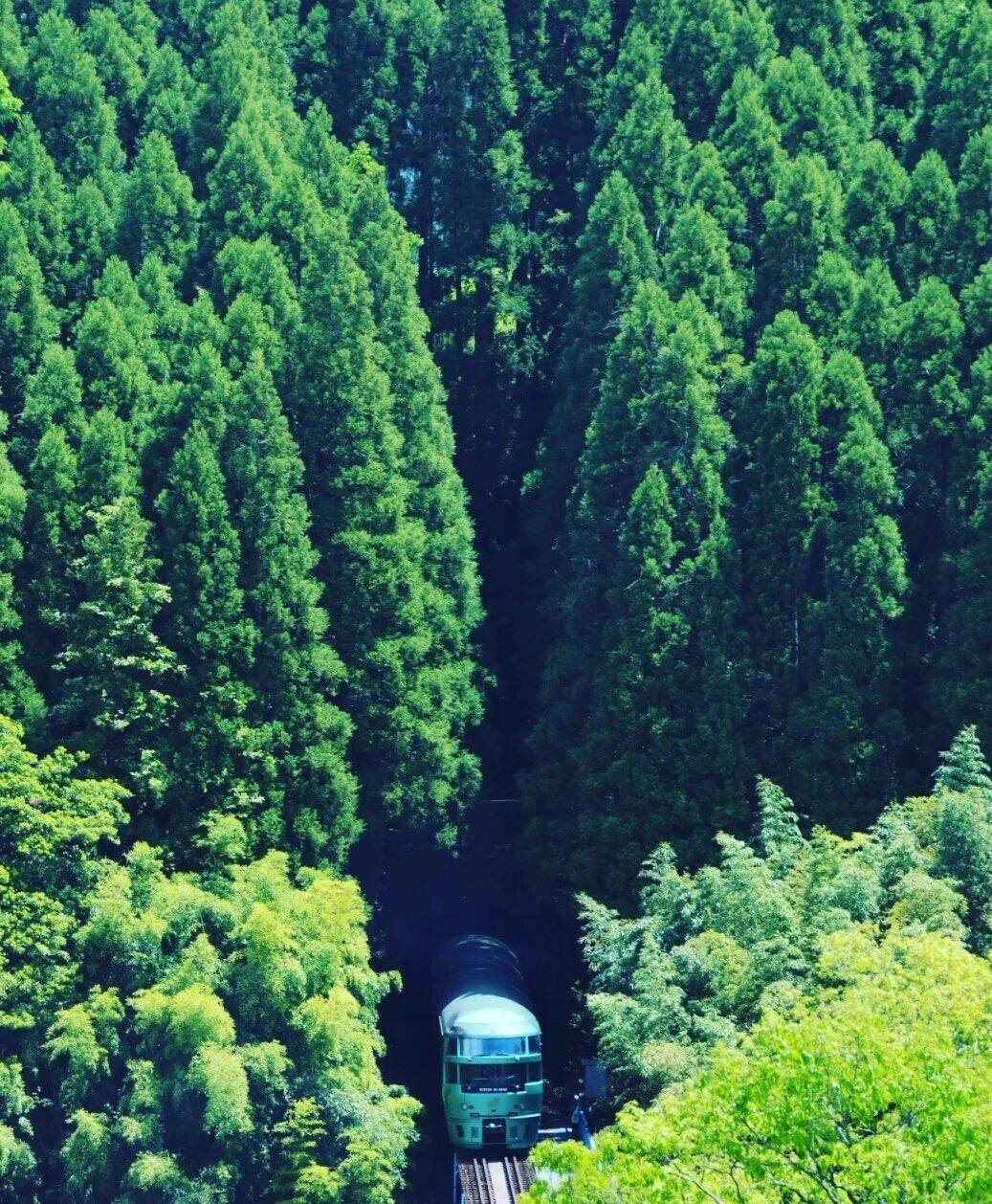
- The "Tohoku Emotion" Factor: There is a luxury "restaurant train" called the Tohoku Emotion that runs on this line. It’s a 2026 must-do for foodies, but it requires booking months in advance. It does not run on days with severe wind warnings.
- Kuji Connection: If you’re heading to Kuji to see the "Ama" divers (made famous by the drama Amachan), give yourself at least a 30-minute buffer for the transfer. The Hachinohe Line and Sanriku Railway stations are adjacent but separate.
- Winter Travel: In the colder months of 2026, the trains are heated, but the stations are not. If you’re waiting at a remote stop like Rikuchu-Nakano, dress in layers. The wind-chill is no joke.
- Check the 2026 Schedule: Local schedules changed slightly in March 2026. Don't rely on old blog posts from 2023. Check the latest timetables at japantrain.net before you leave your hotel.
Frequently Asked Questions
Is the Hachinohe to Kuji train currently running?
As of April 10, 2026, the line is experiencing partial cancellations due to high winds. You should check the live status boards at Hachinohe Station or verify current operations at japantrain.net before attempting the journey.
Can I use the Japan Rail Pass on the Hachinohe Line?
Yes, the Hachinohe Line is a fully-operated JR East line. The JR Pass, JR East Tohoku Area Pass, and JR East-South Hokkaido Pass are all valid. You can order your JR Pass online at japantrain.net to have it ready for your trip.
How long does the train take from Hachinohe to Kuji?
The journey typically takes 1 hour and 45 minutes to 1 hour and 55 minutes, depending on the number of stops. It’s a slow, scenic crawl rather than a high-speed dash. The KiHa 130 series diesel cars used on this route are equipped with universal-access toilets for your comfort. If you are tight on time, check the express bus options at japantrain.net, though they lack the coastal views.
What is the "Tohoku Emotion" train?
It is a "Joyful Train" that serves high-end local cuisine while you watch the ocean. It’s a premium experience and not covered by the standard JR Pass without a significant surcharge and advance reservation. In 2026, it remains one of the most popular luxury rail experiences in Tohoku.
What should I do if my train is cancelled due to wind?
If the Hachinohe to Kuji train is down, JR East often provides a "Bus Daiko" (substitute bus) service, but only if the closure is expected to be long-term. For short-term wind delays like today's, you may simply have to wait for the next scheduled departure. Always re-book your connecting Shinkansen at japantrain.net if a local delay causes you to miss your long-distance train.
Wrapping Up Your Coastal Journey
The Hachinohe Line is a reminder that in Japan, the journey really is the destination. Even with today's wind-driven delays, the lure of the Sanriku Coast remains strong. It’s a place where the mountains literally crash into the sea, and the train is your ticket to the edge of the world. Just remember to pack a windbreaker and a bit of patience.
Ready to see the "Shark Station" for yourself? Don't let the weather catch you off guard. Stay ahead of the gusts and ensure your seat is secured by planning your trip through a trusted source. Book your Tohoku train tickets and rail passes at japantrain.net today for a stress-free 2026 trip.