Senzan Line Train Delays: Strong Winds – May 4, 2026
This guide is currently shown in English because a translation is not available yet.
Senzan Line Train Delays: Strong Winds Cause Disruption on May 4, 2026
Published: May 4, 2026, 09:33 UTC | Updated: May 4, 2026, 09:33 UTC
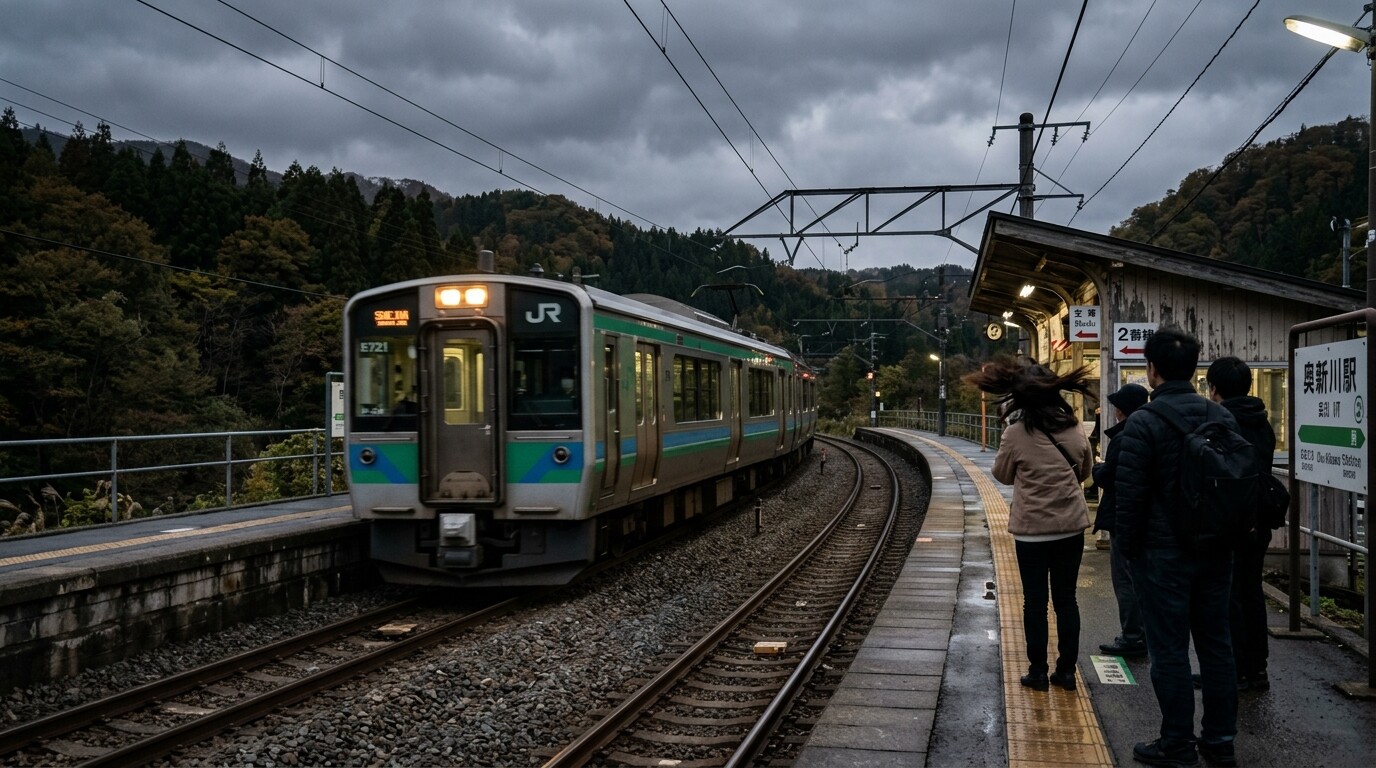
The Senzan Line (仙山線), operated by JR East, is currently experiencing train delays due to the impact of strong winds. According to a service bulletin issued by Yahoo Transit Japan (transit.yahoo.co.jp) at 09:33 UTC on May 4, 2026, some trains along the line are running behind schedule. The notice did not specify the exact magnitude of delays, the number of affected services, or an estimated time for full restoration of normal operations. Travelers planning to ride the Senzan Line today should anticipate potential disruptions and monitor official sources for real-time updates.
This article provides a detailed breakdown of what is currently known about the disruption, which services are affected, and what practical steps riders can take to minimize inconvenience. All information is drawn directly from the authoritative source notice published by Yahoo Transit Japan, and we note clearly where details remain unspecified.
What Happened: Strong Winds Disrupt Senzan Line Operations
On the morning of May 4, 2026, JR East issued a service disruption notice for the Senzan Line (仙山線), citing strong winds (強風) as the cause of delays affecting some trains along the route. The notice, published at 09:33 UTC — which corresponds to 18:33 JST (Japan Standard Time) — confirms that wind conditions have impacted rail operations on this line.
What the Source Confirms
The official notice from Yahoo Transit Japan states the following key facts:
- Affected Line: Senzan Line (仙山線)
- Nature of Disruption: Train delays (列車遅延)
- Cause: Strong winds (強風の影響)
- Scope: Some trains are experiencing delays (一部列車に遅れが出)
- Publication Time: May 4, 2026, 09:33 UTC (18:33 JST)
What the Source Does Not Specify
It is important to note that the published notice is brief and does not include several details that travelers may be looking for. The source does not specify:
- The exact duration or magnitude of the delays (e.g., how many minutes trains are running late)
- The total number of trains affected
- Which specific sections of the Senzan Line are most impacted
- Whether any trains have been fully cancelled or suspended
- An estimated time for restoration of normal service
- Specific wind speed readings or weather warnings in the area
Because the source notice ends with an ellipsis ("一部列車に遅れが出..."), it is possible that additional details were available in the full bulletin but were not included in the excerpt provided. Riders are strongly encouraged to check the original source page for the most complete and up-to-date information.
Understanding the Senzan Line's Vulnerability to Wind
The Senzan Line runs between Sendai Station (仙台駅) in Miyagi Prefecture and Uzen-Yamagata Station (山形駅) in Yamagata Prefecture, covering approximately 58.0 kilometers. The route passes through mountainous terrain, including the Ōu Mountain Range, where the line traverses several tunnels and cuts through valleys and ridgelines. This geography makes the Senzan Line particularly susceptible to weather-related disruptions, including strong winds, heavy rain, snow, and landslides.
Sections of the line that run through higher elevations and open terrain between stations such as Sakunami (作並) and Ayashi (愛子) are especially exposed to wind effects. JR East has historically implemented speed restrictions and temporary service suspensions on the Senzan Line when wind speeds exceed safety thresholds, in accordance with standard operating procedures for JR East rail lines in the Tōhoku region.
May 4 falls during Japan's Golden Week holiday period, a time when leisure travel volumes are significantly elevated. The Senzan Line is a popular route for travelers heading to destinations such as the Sakunami Onsen hot spring area and the Yamagata basin, which means that even moderate delays during this period can affect a larger-than-usual number of passengers.
Affected Services: Which Trains Are Delayed?
According to the source notice, "some trains" (一部列車) on the Senzan Line are experiencing delays. However, the bulletin does not enumerate specific train services, departure times, or station-level impacts.
What We Know
| Detail | Status |
|---|---|
| Affected Line | Senzan Line (仙山線) |
| Operator | JR East (東日本旅客鉄道) |
| Disruption Type | Delays (列車遅延) |
| Cause | Strong winds (強風) |
| Scope of Impact | Some trains — specific services not listed in the source |
| Full Suspensions | Not mentioned in the source |
| Estimated Recovery Time | Not provided in the source |
| Alternative Transport | Not mentioned in the source |
Senzan Line Overview
For context, the Senzan Line operates both local and rapid services. The line is a single-track railway for much of its route, which means that delays to one train can cascade and affect subsequent services in both directions. Key stations along the line include:
- Sendai (仙台) — The eastern terminus, a major JR East hub in Tōhoku
- Ayashi (愛子) — A station in the western suburbs of Sendai
- Sakunami (作並) — Gateway to the Sakunami Onsen area
- Aterazawa (左沢) — A junction point on the line
- Uzen-Yamagata (山形) — The western terminus, connecting to the Yamagata Shinkansen and other JR lines
The source notice does not indicate whether delays are concentrated on any particular segment of the line or distributed across the entire route. Travelers using any section of the Senzan Line should be prepared for potential delays.
Impact on Connecting Services
At Sendai Station, the Senzan Line connects with multiple JR East services, including the Tōhoku Shinkansen, the Jōban Line, the Senseki Line, and the Tōhoku Main Line. At Uzen-Yamagata Station, passengers can transfer to the Yamagata Shinkansen (Tsubasa) and the Aterazawa Line. The source notice does not indicate whether connecting services have been affected. However, delays on the Senzan Line may cause passengers to miss planned connections, particularly for Shinkansen services that operate on fixed schedules.
Travelers with onward connections on the Tōhoku rail network should allow extra transfer time and verify the status of their connecting services independently.
What Travelers Should Do
The following recommendations are based on the information available in the official source notice and general best practices for dealing with train delays in Japan. No specific guidance was included in the source bulletin beyond the delay notification itself.
1. Check Real-Time Status Before Departing
Given that the delay notice was published at 09:33 UTC (18:33 JST) on May 4, 2026, and conditions may change, travelers should check the latest status before heading to the station. The following resources provide real-time updates:
- Yahoo Transit Japan — Senzan Line Service Information (the original source of this notice)
- JR East official website and mobile app (JR East App / Ekitinet)
- Station announcements and information boards at Sendai, Uzen-Yamagata, and intermediate stations
2. Allow Extra Travel Time
Because the source indicates that "some trains" are delayed but does not quantify the extent of the delays, travelers should build a buffer into their schedules. If you have a time-sensitive commitment — such as a Shinkansen connection, a hotel check-in, or an event — consider departing significantly earlier than planned or exploring alternative routes.
3. Consider Alternative Routes
If the Senzan Line delays are substantial, travelers moving between Sendai and Yamagata may consider the following alternatives. Note that the source notice does not mention any bus substitution services or alternative transport arrangements, so these are general suggestions based on available rail infrastructure:
- Yamagata Shinkansen (Tsubasa): The Yamagata Shinkansen connects Tokyo Station to Yamagata Station via Fukushima, with through-service to Shinjo. From Sendai, passengers would need to reach Fukushima first (via Tōhoku Shinkansen) and then transfer to the Tsubasa. This is a longer but potentially more reliable route during weather disruptions on the Senzan Line.
- Highway Bus: Several bus operators run express services between Sendai Station and Yamagata Station. Journey time is approximately 1 hour 20 minutes to 1 hour 40 minutes, depending on traffic and the specific service.
- Driving: The distance between Sendai and Yamagata by road is approximately 60–70 kilometers via National Route 48 or the Tōhoku Expressway. However, strong wind conditions may also affect driving safety in mountainous sections.
4. Understand Your Passenger Rights
Under JR East's policies, when delays exceed one hour, passengers holding reserved-seat tickets may be eligible for a refund of the limited express charge or reserved seat charge. For commuter pass holders, delays of a certain threshold may qualify for service credits. The source notice does not address refund or compensation policies directly, so travelers should inquire at JR East ticket offices or consult the JR East delay certificate and refund guidelines for specific terms.
If you require a delay certificate (遅延証明書) for work or school, these are typically available at station ticket offices and via JR East's online platforms during officially recognized disruptions.
5. Monitor Weather Conditions
Since the cause of the delay is identified as strong winds, and the Senzan Line passes through mountainous terrain where wind conditions can change rapidly, the situation may improve or worsen depending on weather developments. The source notice does not include a weather forecast or wind speed data. Travelers can check the Japan Meteorological Agency (JMA) website for wind advisories and warnings in the Miyagi and Yamagata prefectures.
6. Be Prepared for Extended Waits
If you are already at a station along the Senzan Line when delays are announced, be prepared for the possibility of extended waiting times. Station facilities at smaller stops along the line may have limited amenities. Larger stations such as Sendai and Uzen-Yamagata have waiting rooms, restrooms, shops, and restaurants within or adjacent to the station.
Official Source Information
All information in this article is based on the following official source notice:
| Source Label | Authoritative Media (权威媒体) |
| Original Japanese Headline | 仙山線 列車遅延 |
| Publication Time | May 4, 2026, 09:33 UTC (May 5, 2026, 06:33 JST*) |
| Source Site | transit.yahoo.co.jp (Yahoo Transit Japan) |
| Source URL | https://transit.yahoo.co.jp/diainfo/18/0 |
| Japanese Summary | 仙山線:列車遅延。強風の影響で、一部列車に遅れが出... |
*Note: The UTC-to-JST conversion assumes standard JST (UTC+9). The publication time of 09:33 UTC converts to 18:33 JST. However, since 18:33 JST on May 4 falls in the evening, this may reflect the time the notice was indexed or published on the platform. Readers should refer to the original source for the locally displayed timestamp.
We strongly recommend checking the original source directly for the most current information, as the status of this disruption may have changed since publication. Yahoo Transit Japan is a widely used and trusted source for real-time rail service information in Japan, drawing data from official railway operator bulletins.
Frequently Asked Questions (FAQ)
Q1: How long will the Senzan Line delays last?
The source notice does not provide an estimated time for restoration of normal service. Delays caused by strong winds typically persist until wind conditions subside to safe operating levels. Travelers should monitor the official service information page for updates.
Q2: Are all Senzan Line trains delayed, or only some?
According to the source, only "some trains" (一部列車) are experiencing delays. The notice does not specify which particular services are affected or whether the delays are concentrated in a specific section of the line. It is possible that some trains are running on or close to schedule while others are significantly delayed.
Q3: Has the Senzan Line been fully suspended?
The source notice describes the situation as "train delays" (列車遅延), not a full suspension (運転見合わせ). Based on the wording, services appear to still be operating, albeit behind schedule. However, the source does not rule out the possibility of partial suspensions on certain segments, and the situation may change. Check the latest updates before traveling.
Q4: Can I get a refund if my train is delayed?
The source notice does not address refund or compensation policies. Under JR East's general policies, passengers with reserved-seat tickets may be eligible for a refund of seat reservation charges if delays exceed one hour. Commuter pass holders may also have recourse. For specific terms and conditions, consult JR East's official refund guidelines or inquire at a JR East ticket office (Midori-no-Madoguchi).
Q5: Is there a replacement bus service running?
The source notice does not mention any bus substitution (バス代行) services. In some cases, JR East arranges alternative bus transport when lines are suspended, but this is typically announced in the service bulletin. Since the current notice describes delays rather than a suspension, bus replacement services may not be in effect. Travelers who need an alternative route between Sendai and Yamagata may consider highway bus services or the Yamagata Shinkansen via Fukushima, as outlined in the Tōhoku trains section of our site.
Context: Golden Week Travel and the Senzan Line
May 4, 2026, falls squarely within Japan's Golden Week (ゴールデンウィーク) holiday period, one of the busiest travel seasons of the year. The Senzan Line serves as an important regional connector between Sendai, the largest city in the Tōhoku region, and Yamagata, the capital of Yamagata Prefecture. During Golden Week, leisure travelers, families, and tourists use this line to access destinations such as:
- Sakunami Onsen: A hot spring resort area accessible directly from Sakunami Station on the Senzan Line
- Yamagata City: Home to cultural sites, the Yamagata castle ruins, and the Yamagata Hanagasa Festival (though held later in the year)
- Zaō Onsen: Accessible via bus from Yamagata Station, a popular hot spring and mountain resort area
- Mountain hiking and nature areas: The Senzan Line corridor provides access to several trailheads and scenic spots in the Ōu Mountains
Disruptions during this peak period can have a significant impact on travel plans. The combination of holiday traffic volumes and weather-related delays underscores the importance of checking service status early and having contingency plans in place.
Historical Weather Disruptions on the Senzan Line
The Senzan Line has a documented history of weather-related service disruptions. The mountainous terrain between Sendai and Yamagata exposes the line to a range of meteorological hazards throughout the year:
- Strong winds: Particularly during spring and autumn, when pressure systems can generate gusty conditions in the mountain passes
- Heavy snowfall: Winter months bring significant snow accumulation in the higher-elevation sections of the line
- Heavy rain and flooding: The rainy season (tsuyu) and typhoon season can cause landslides, track flooding, and infrastructure damage
- Debris on tracks: Strong winds and storms can bring down trees, branches, and other debris onto the single-track line
JR East maintains the Senzan Line with these risks in mind, employing weather monitoring systems, speed restriction protocols, and rapid-response maintenance teams. Nevertheless, the inherent vulnerability of the route means that weather-related delays and suspensions are not uncommon, and travelers are advised to always have a backup plan when using this line during adverse weather conditions.
Related Service Information
For travelers seeking additional information about rail services in the Tōhoku region and beyond, the following resources on JapanTrain.net may be helpful:
- Senzan Line (仙山線) — Route Guide and Station Information
- Sendai Station — Station Guide, Maps, and Connections
- Uzen-Yamagata Station — Station Guide and Shinkansen Connections
- JR East — Operator Overview and Service Updates
- Tōhoku Region Trains — Overview of Rail Services in Northeast Japan
- Train Delay Information — How to Check, Refunds, and Delay Certificates
Summary and Next Steps
As of the latest available information from Yahoo Transit Japan (published May 4, 2026, at 09:33 UTC), the Senzan Line is experiencing train delays caused by strong winds. Some trains along the line are running behind schedule, but services have not been reported as fully suspended. The source notice does not provide details on the specific trains affected, the duration of delays, or an estimated time for service normalization.
Travelers using the Senzan Line today or in the immediate future should:
- Check the official service information page for real-time updates before departing
- Allow extra time for travel and connections, especially to Shinkansen services
- Consider alternative routes if delays are substantial, including the Yamagata Shinkansen via Fukushima or highway bus services
- Request delay certificates from JR East if needed for work or school
- Monitor weather advisories from the Japan Meteorological Agency for the Miyagi and Yamagata areas
We will continue to monitor this situation and update this article as new information becomes available from official sources. For the most current service status, always refer directly to Yahoo Transit Japan's Senzan Line information page or the JR East official channels.
This article is based on a service notice from Yahoo Transit Japan (transit.yahoo.co.jp), classified as an authoritative media source for Japanese rail service information. All facts presented are drawn from the original source notice. Where details were not provided by the source, this has been explicitly noted.