Travel13 min read

2026 Tokaido Shinkansen Riding Guide, Ticket Booking Tips and Precautions

2026 Tokaido Shinkansen Riding Guide, Ticket Booking Tips and Precautions

The Tokaido Shinkansen is a shinkansen line connecting Tokyo Station and Shin-Osaka Station in Japan. It began operation in 1964 and is Japan's first high-speed railway, as well as the world's first commercial high-speed railway system. Because many trains operate in conjunction with the Sanyo Shinkansen, it is often referred to as the "Tokaido-Sanyo Shinkansen." Opening on October 1, 1964, it has become a major transportation artery between east and west Japan. The Tokaido Shinkansen is arguably the most sought-after railway line for foreign tourists visiting Japan. Starting in the capital, Tokyo, this line passes through Nagoya and continues towards Kyoto and Osaka. Known as the "Golden Route," it offers stunning views of Mount Fuji from the train windows. It's a classic among classics, unrivaled in popularity. Other attractions include views of tea fields near Shizuoka, Lake Hamana, and Mount Ibuki near Sekigahara.

Tokaido Shinkansen Route Map and Stations

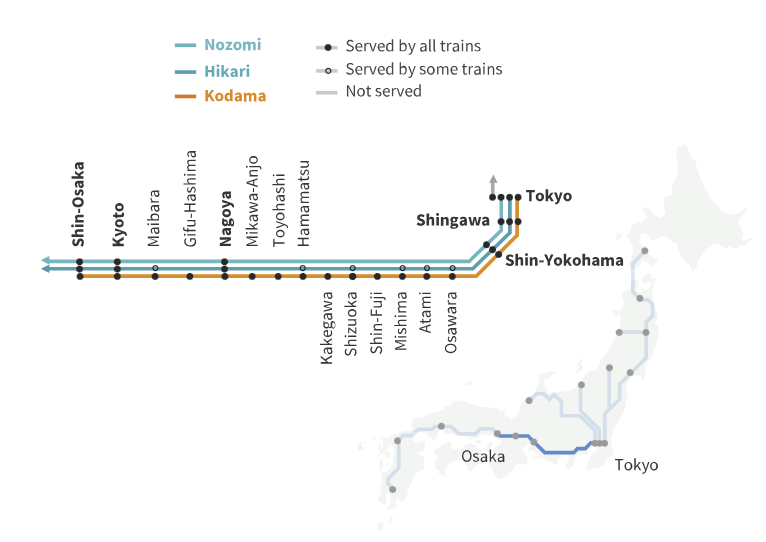
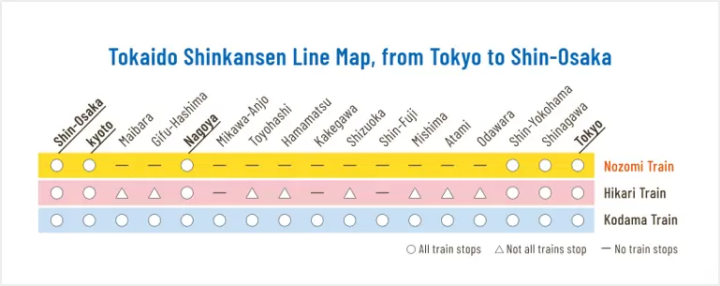
From Tokyo Station to Shin-Osaka Station, the Tokaido Shinkansen stops at the following stations: Tokyo, Shinagawa, Shin-Yokohama, Odawara, Atami, Mishima, Shin-Fuji, Shizuoka, Kakegawa, Hamamatsu, Toyohashi, Mikawa-anjo, Nagoya, Gifu-Hashima, Maibara, Kyoto, and Shin-Osaka, totaling 17 stations.

Image

Train Types

When the Tokaido Shinkansen opened on October 1, 1964, it featured two train types: the Hikari and the Kodama. On March 18, 1993, the Nozomi was added, connecting directly to the Sanyo Shinkansen. Starting October 1, 2003, the Nozomi replaced the Hikari as the Tokaido Shinkansen's main train type.

Image

Nozomi (のぞみ, Nozomi)

The fastest Shinkansen on the Tokaido Line. The train stops only at major stations along the route. Travel time from Tokyo to Shin-Osaka is 150 minutes, from Kyoto to Shin-Osaka is 135 minutes, and from Nagoya to Shin-Osaka is 95-100 minutes. Eight trains depart each hour, four in each direction, with additional trains running during peak hours. Some Nozomi trains continue to operate outside the Tokaido Line.

[Stops] Tokyo – Shinagawa – Shin-Yokohama – Nagoya – Kyoto – Shin-Osaka

Hikari (ひかり, Hikari)

As the second-fastest Shinkansen on the Tokaido Line, the Hikari also runs between Tokyo and Shin-Osaka, stopping at various stations depending on the service. Travel time from Tokyo to Shin-Osaka is 175 minutes, from Kyoto to Shin-Osaka is 155-160 minutes, and from Nagoya to Shin-Osaka is 100-120 minutes (depending on the service). There are four Hikari trains per hour, two in each direction, with a train frequency of approximately every half hour. Hikari trains only stop in major cities, but these stops vary by train.

[Stops] Tokyo – Shinagawa – Shin-Yokohama – Nagoya – Kyoto – Shin-Osaka

Image

Kodama (こだま, Kodama)

This is the slowest line on the Tokaido Shinkansen, stopping at all stations between its starting and ending points. It runs two trains per hour. It is the only line not to have a direct connection with the Sanyo Shinkansen.

[Stops] Tokyo – Shinagawa – Shin-Yokohama – Odawara – Atami – Mishima – Shin-Fuji – Shizuoka – Kakegawa – Hamamatsu – Toyohashi – Mikawa-Anjo – Nagoya – Gifu-Hashima – Maibara – Kyoto – Shin-Osaka

Image

Note: Regular JR Passes cannot be used on Nozomi trains. If you use a JR Pass, you can choose either the Hikari or Kodama trains.

Tokaido Shinkansen Timetable

>> Tokyo to Osaka Timetable

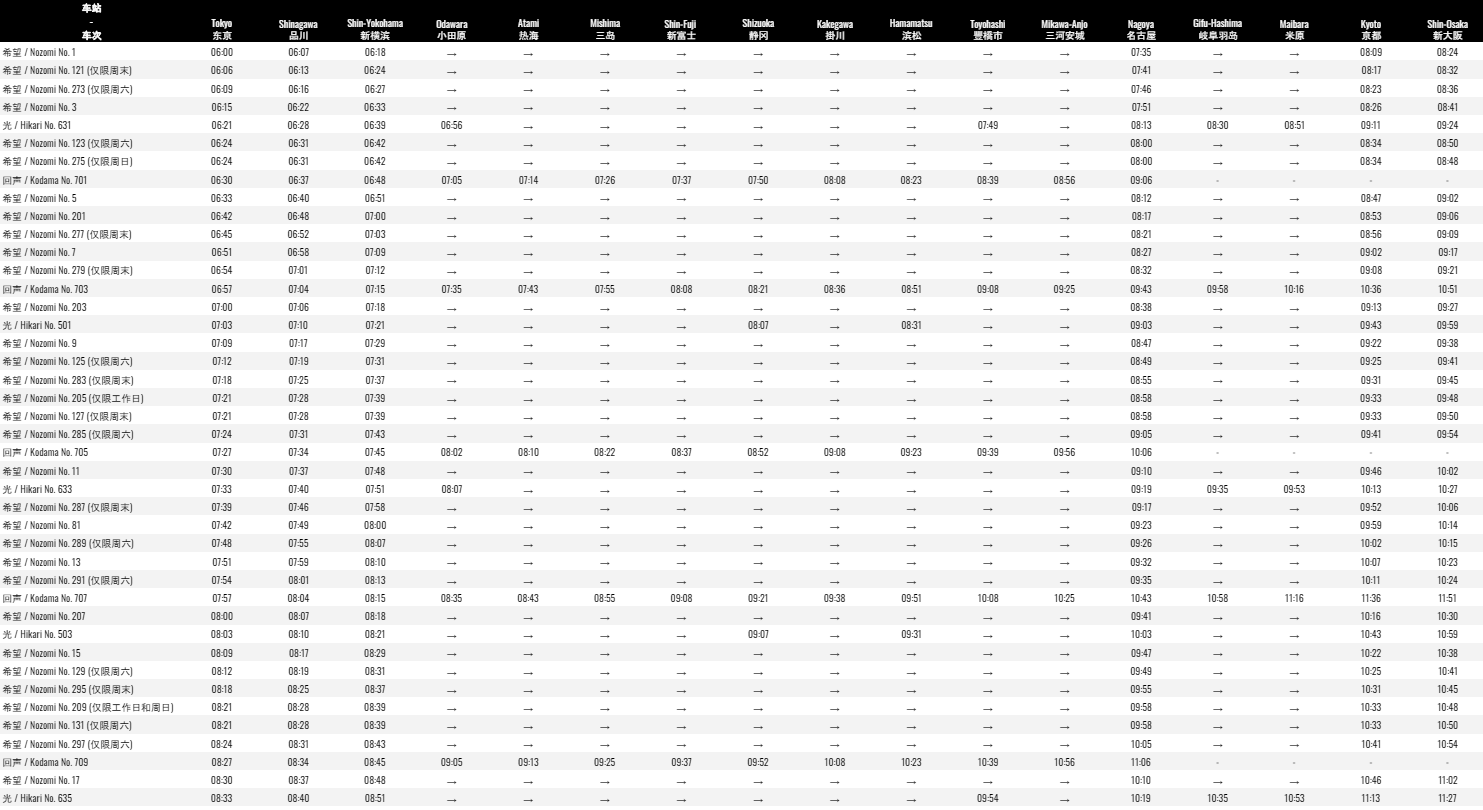
The earliest train from Tokyo Station to Shin-Osaka Station departs at 06:00, stops in Nagoya at 07:35, stops in Kyoto at 08:09, and arrives at Shin-Osaka Station at 08:24.

The last train from Tokyo Station to Shin-Osaka Station departs at 21:24, stops in Nagoya at 22:58, stops in Kyoto at 23:32, and arrives at Shin-Osaka Station at 23:45.

The following is a partial train schedule:

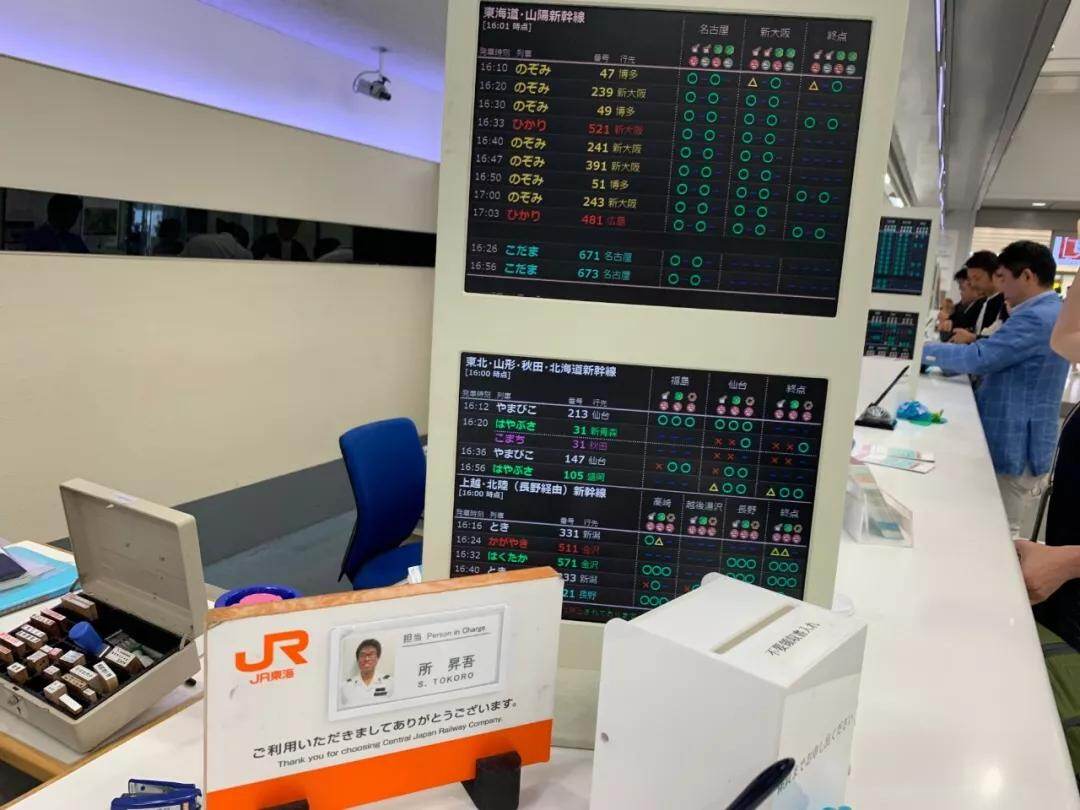
Image

>> Timetable from Osaka to Tokyo

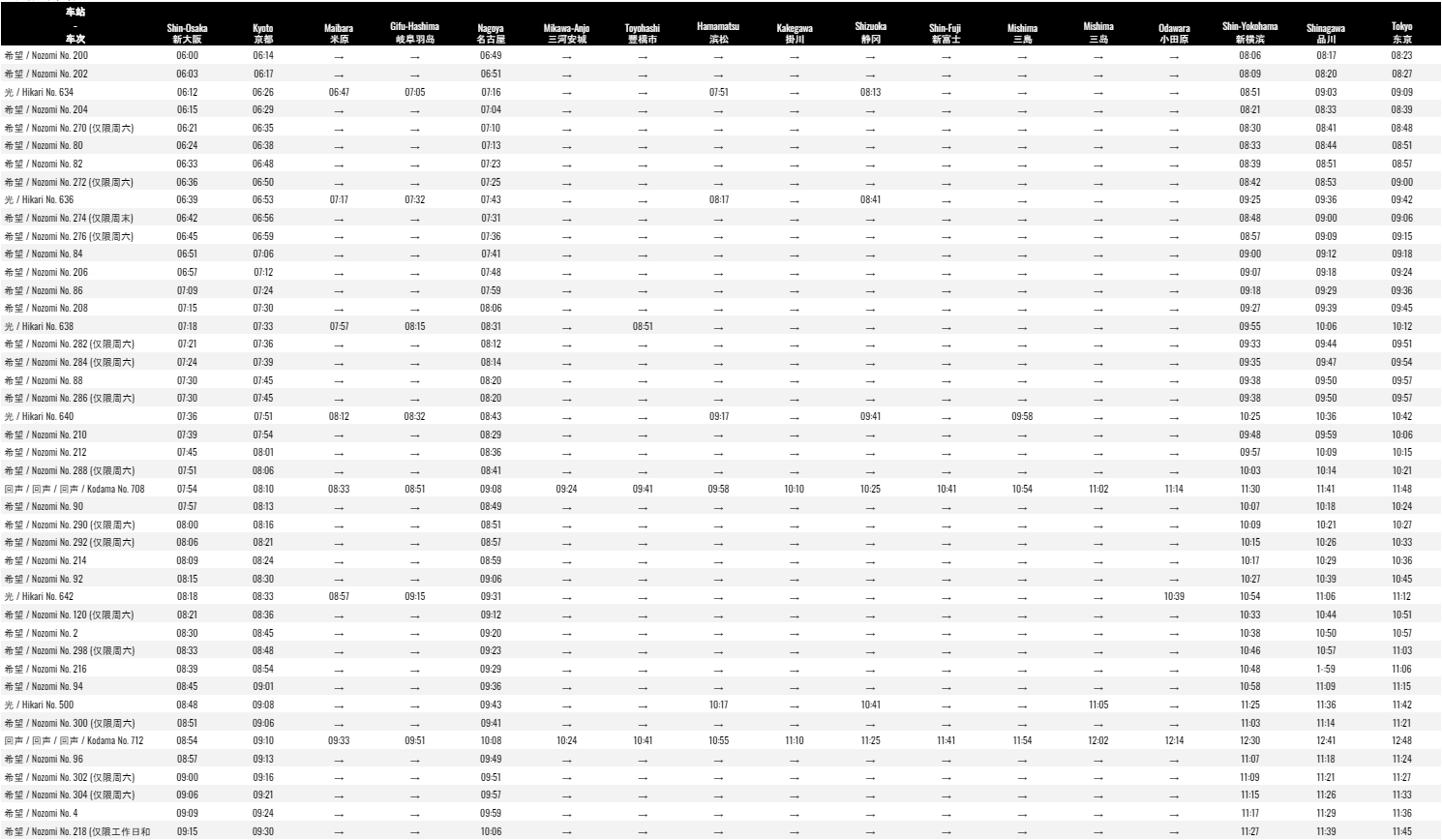
The earliest train from Shin-Osaka Station to Tokyo Station departs at 06:00, stops in Kyoto at 06:14, stops in Nagoya at 06:49, and arrives at Tokyo Station at 08:23.

The last train from Shin-Osaka Station to Tokyo Station departs at 21:24, stops in Kyoto at 21:38, stops in Nagoya at 22:12, and arrives at Tokyo Station at 23:45. There are two later trains departing Shin-Osaka Station and terminating at Nagoya Station. The last train departs Shin-Osaka Station at 22:30, stops in Kyoto at 22:46, and ends at Nagoya Station at 23:20.

The following is a partial train schedule:

Image

Seat Types

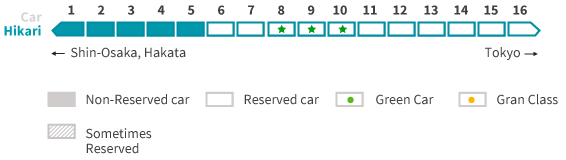
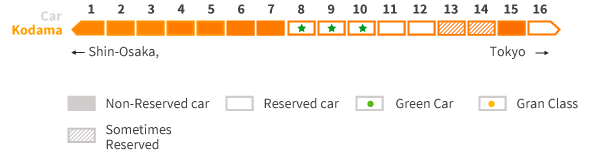
Japanese Shinkansen seats are divided into different classes: non-reserved seats, reserved seats, green seats, and GranClass cars. These two classes are collectively referred to as ordinary cars.

Ordinary Class

[Fare] Between a few thousand and 10,000 yen

This is the most basic seat type. These seats are typically arranged in rows of three, similar to traditional train seats. Ordinary Class seats provide basic comfort.

Non-reserved seats

Non-reserved seats are not assigned and are generally located in the first three cars of Shinkansen trains (with variations depending on the model). Those who purchase non-reserved seats do not need to be assigned a seat; they can choose any seat within the non-reserved car. Since seats cannot be assigned, fares are cheaper than reserved seats, but if there are no vacancies, you will have to stand. Non-reserved seats offer the best value for money during off-peak travel or for short journeys.

Reserved seats

As the name suggests, reserved seats are reserved. When you purchase a reserved seat ticket, your seat is assigned to you. The fare is slightly more expensive than non-reserved seats. If your trip falls on a holiday or is long, it's recommended to purchase reserved seats in advance to ensure a pleasant journey.

Note: If you purchase a non-reserved seat ticket, you cannot purchase a reserved seat. However, if the non-reserved car is full but reserved seats are available, you can purchase a ticket to move to a reserved seat. Ticket prices also vary depending on the off-season and peak season.

Green Class

[Fare] Between 20,000 and 30,000 yen

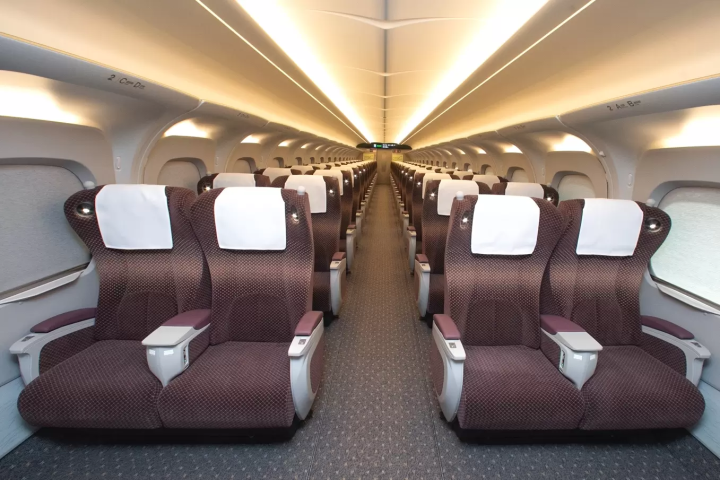
Green Class is a premium seat type, equivalent to first class. Green Class seats are arranged two abreast, offering a wider seat and more legroom. This seat type is suitable for passengers seeking a higher level of comfort.

As Green Class represents business class service, wet towels and hot and cold drinks are provided. The seats can also be adjusted to 40 degrees, allowing you to take a rest during the journey. The green carriage is also the quietest of the three carriages. If you want to have a good rest and enjoy the scenery along the way, you can experience the green carriage.

Image

Ticket Types and How to Purchase Tickets

5.1 Ticket Types

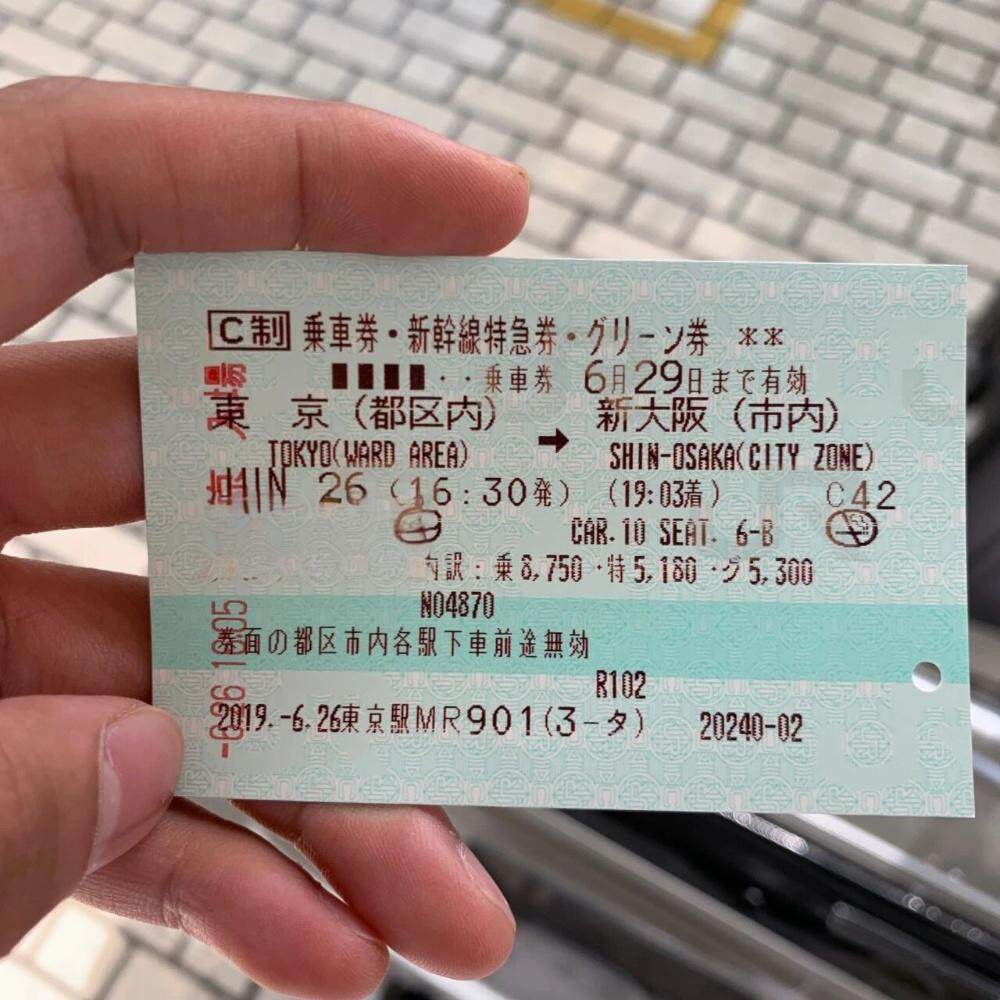
Tickets are broadly divided into two categories: tickets required for all types of trains, and tickets required only for trains with additional services or seats. The former are called tickets, while the latter include limited express tickets and green car tickets.

For ordinary/rapid trains without reserved seats, only a ticket is required.

For Shinkansen/limited express trains, you must purchase a limited express ticket valid for the train you are traveling in addition to your ticket. A limited express ticket signifies that you have paid for the additional services provided by that train.

Some trains have green cars (first class), and you must pay an additional fee to purchase a green car ticket. Passengers without a green car ticket are not allowed to enter the green cars.

Image

5.2 Ticket Purchase Methods

Tokaido Shinkansen tickets can be purchased at JR station counters, JR ticket vending machines, and travel agencies. To purchase Shinkansen tickets at a station, please go to the ticket window, tell the ticket seller your desired station, train number, and time, and pay with cash or credit card. Some major stations also have ticket vending machines next to the ticket windows; you can also purchase tickets by following the on-screen instructions. The JR website also sells advance tickets and a variety of special fares. Shinkansen tickets can also be purchased directly from major travel agencies throughout Japan, such as JTB, Kinki Nippon Tourist, Nippon Travel, and Hankyu Kotsu. Tickets can also be purchased directly from the ticket counter staff.

When purchasing tickets, you will need to provide the following information:

Departure station, destination station

Departure date and time

Train type

Number of passengers (adults, children (6-11 years old))

Seat type (smoking/non-smoking, unreserved/reserved/green car)

Image

Tip: Book Shinkansen tickets online at www.japantrain.net for multilingual support and guaranteed seats, making travel worry-free, especially during peak season. For on-site assistance, please visit a JR Ticket Office (Midori no Madoguchi) to purchase tickets or exchange for a JR Pass. However, be prepared to queue during peak hours.

Onboard Facilities

The Tokaido Shinkansen offers a variety of convenient services to ensure a comfortable travel experience. Here are some particularly useful onboard amenities.

6.1 Power Outlets

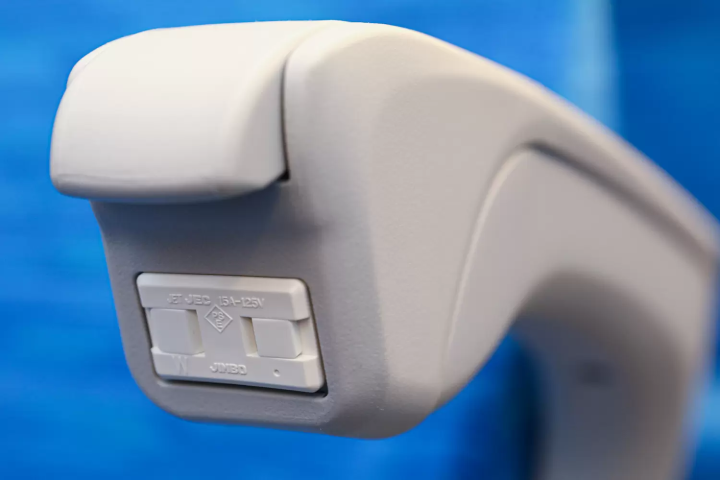
Charging electronic devices on long journeys is always a concern. All window seats (A and E) on the Tokaido Shinkansen are equipped with power outlets, and on the latest N700S trains, all seats have outlets! This means you never have to worry about your smartphone or laptop running out of power during your Tokaido Shinkansen journey. Enjoying a comfortable journey without worrying about battery life is fantastic!

Image

6.2 Wi-Fi

The Tokaido Shinkansen offers free Wi-Fi onboard, allowing you to stay connected anytime, anywhere! It's incredibly convenient for checking tourist attractions and planning your next trip.

6.3 Baby Restrooms

For families with young children, restrooms equipped with diaper changing facilities are a great convenience! These restrooms are located on the Tokyo side of the odd-numbered cars. There are two Western-style restrooms, and the one marked with a baby sign is equipped with a folding crib.

Baggage Regulations

If you're planning to bring large luggage on the Tokaido Shinkansen, please be aware of the following restrictions:

First, if your luggage's total dimensions are between 161cm and 250cm, you'll need to reserve a specific seat.

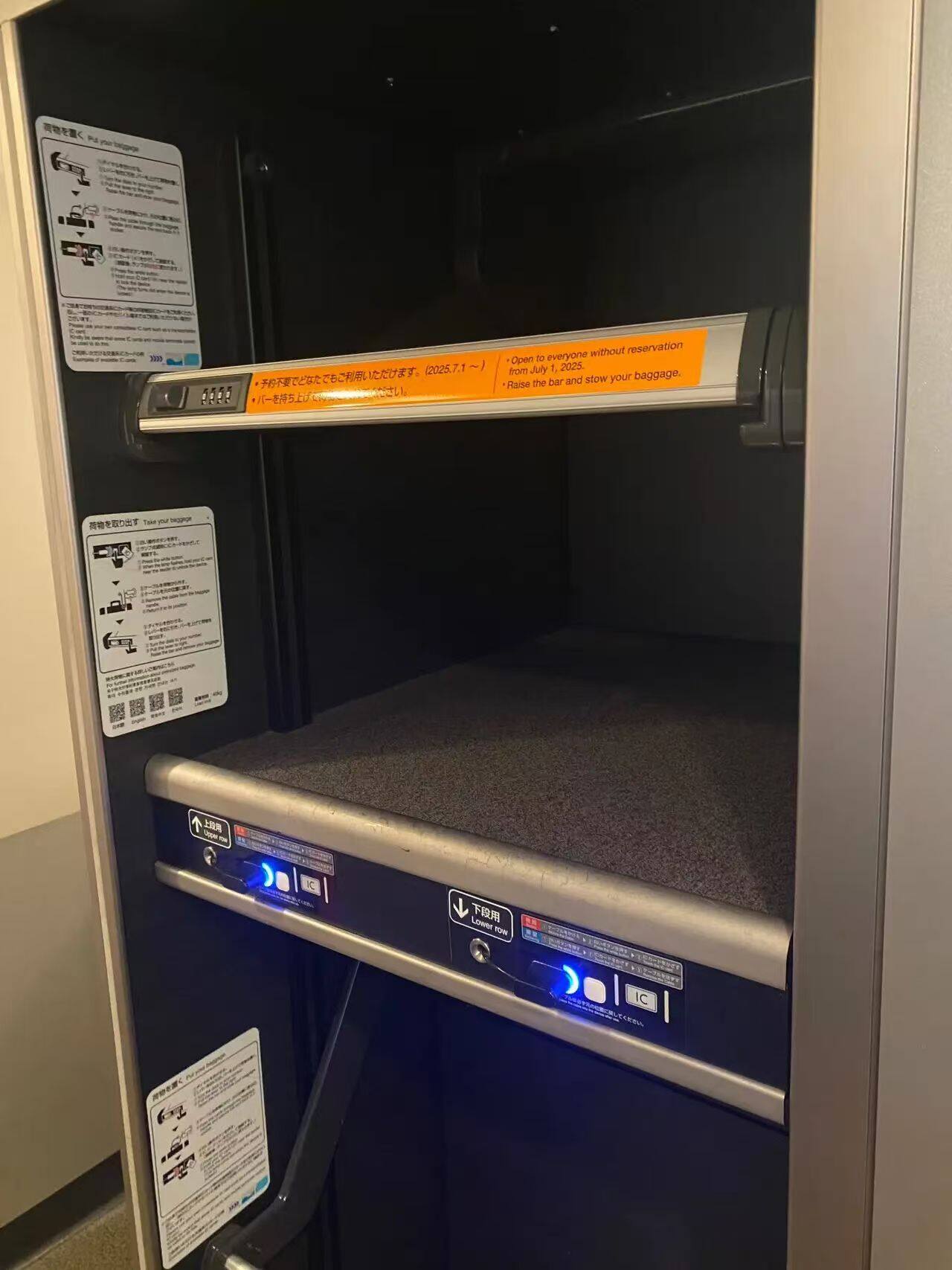
Secondly, you can also choose to reserve luggage space, but the luggage dimensions must meet the following specifications - upper compartment (80cm x 60cm x 50cm); lower compartment (80cm x 60cm x 40cm).

Image

JR Pass

It's no secret that Shinkansen fares in Japan are quite expensive. If you'll be traveling frequently between major cities, a JR Pass is a great option. The JR Pass (full name: Japan Rail Pass; Japanese: ジャパンレールパス) is a pass offered by the six JR Group companies (JR Hokkaido, JR East, JR Central, JR West, JR Shikoku, and JR Kyushu). It grants unlimited travel on selected JR-operated transportation (including passenger trains, buses, and ferries) during the valid period, making traveling across Japan more convenient, faster, and more economical. Travelers can choose from 7-day, 14-day, and 21-day passes, covering either ordinary or ordinary and business class carriages. The JR Pass is valid on the Tokaido Shinkansen, but not the Nozomi service. Hikari and Kodama services are free.

To purchase the Japan Rail Pass, you must meet one of the following two conditions:

Foreign tourists visiting Japan from abroad with a "Temporary Visit" entry status for sightseeing purposes.

Japanese citizens living abroad who meet certain conditions.

Dining Recommendations on the Tokaido Shinkansen

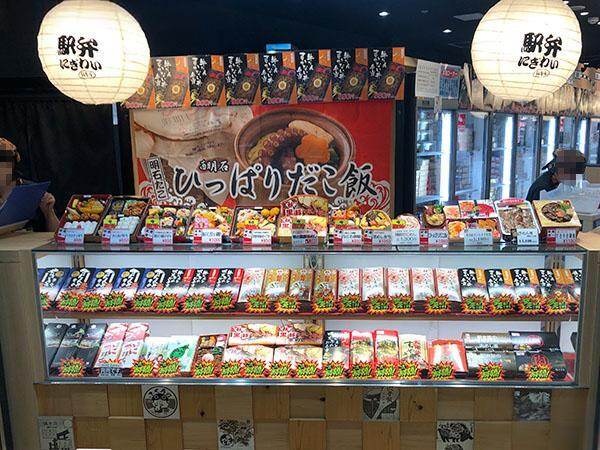
Eating is generally permitted on Shinkansen trains, and there are usually designated dining cars or vending machines offering a variety of drinks, snacks, and bento boxes. Many Shinkansen trains have dining cars offering a variety of food and drinks. You can purchase Japanese delicacies such as bento boxes, sushi, and noodles, as well as beverages such as coffee and tea. Alternatively, you can purchase delicious bento boxes, bread, fruit, and other snacks at the station, or prepare your own. However, it is not recommended to bring strong-smelling foods on board to avoid inconvenience to other passengers.

Image

Food and Beverage Options on Shinkansen Trains

  • Bento (Boxed Meals): A variety of bento options are available, such as sushi bento, fried chicken bento, and eel rice bento. These are convenient, portable, and delicious meals perfect for enjoying on the train.
  • Ramen: Some Shinkansen trains offer ramen in their dining cars, featuring multiple broth flavors and styles—a traditional Japanese noodle dish you can enjoy while traveling.
  • Sandwiches and Bread: Light breakfast or lunch options including various sandwiches and bread items, ideal for easy carrying and quick meals.
  • Coffee and Tea: Available from vending machines or dining cars on the train, offering a range of coffee and tea beverages.
  • Snacks: A selection of snacks like sunflower seeds, crackers, and fresh fruit are provided, perfect for light bites or breaks during your journey.

How to Enjoy the Tokaido Shinkansen

10.1. Viewing Mount Fuji on a Clear Day

If you reserve a seat on the Tokaido Shinkansen, we recommend the DE side (CD side of the Green Car)!

This is because on a clear day, you can see Mount Fuji!

It's undoubtedly exciting to see the magnificent view of Mount Fuji, a symbol of Japan.

Mount Fuji is visible near Shin-Fuji.

Some train conductors will announce the time of passing Mount Fuji through announcements. However, it's best to ask the clerk or conductor in the passing car for the exact time.

10.2. Borrowing Blankets

This service is only available in Green Cars. Sometimes, the air conditioning in the larger cars can be quite cold.

Blankets are a nice touch!

Soon after departure, you'll see train attendants handing out wet wipes. You can ask for them at that time.

If you don't see the conductor, blankets are available in the luggage lockers near the entrances.

10.3. A special deal on the morning-only set meal in the morning carriages!

A must-try on trains departing early in the morning.

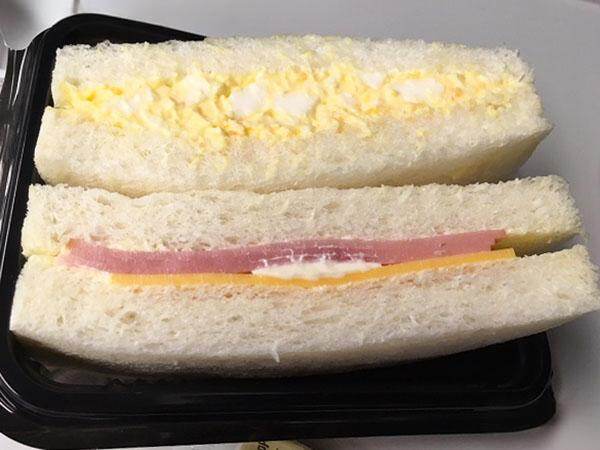
This is the "Sandwich & Coffee 500 yen (tax included)" set meal, available only in carriages departing before 8:30 AM.

What? A sandwich? You might be a little disappointed, but the sandwiches sold on the trains are actually quite delicious.

Soft bread filled with a generous helping of egg, ham, and cheese.

This soft and fluffy texture is something you might not even find in bakeries.

Image

Riding Precautions

  1. Queue up on the platform and wait to board the train.
  2. Do not block the aisles with luggage.
  3. Please speak softly when conversing.
  4. Before reclining your seat, consider the passenger behind you.
  5. Return your seat to its upright position before getting off.
  6. Set your phone to silent mode.
  7. Move to the connecting area between carriages to make phone calls.
  8. If you need to use luggage storage in Japan, carry some 100-yen coins with you.
  9. Many stations offer free Wi-Fi; food and drinks are available at stations and on trains.
  10. It is advisable to avoid peak travel hours in major cities: 7:30–9:30 AM and 5:00–8:00 PM.
  11. Smoking is prohibited on most Shinkansen lines. However, some older trains on the Tōkaidō/Sanyō Shinkansen still have designated smoking cars. On newer trains along these lines, smoking is only permitted in specially designated small areas. Other Shinkansen lines do not have smoking facilities.
Tags:Travel