Your Ultimate Guide to the Hokkaido Shinkansen: Routes, Trains & Travel Tips
Hokkaido Shinkansen Overview
Brief History
The Hokkaido Shinkansen began its commercial operations on March 26, 2016, with the initial segment connecting Shin-Aomori on Honshu to Shin-Hakodate-Hokuto on Hokkaido.
Operator
The service is jointly operated by JR Hokkaido and JR East. JR East typically manages services on the Honshu side (up to Shin-Aomori), while JR Hokkaido operates the segment within Hokkaido, ensuring a seamless connection between the two islands' rail networks.
Highlights
The most significant highlight of the Hokkaido Shinkansen is its journey under the sea via the Seikan Tunnel. At 53.85 km in length, with a 23.3 km undersea portion, it is one of the world's longest and deepest operational train tunnels, allowing the Shinkansen to cross the Tsugaru Strait.
Hokkaido Shinkansen Train Services: Hayabusa vs. Hayate
Two primary Shinkansen services operate on the Hokkaido Shinkansen line, distinguished by their speed, stops, and amenities.
Hayabusa (E5/H5 Series)
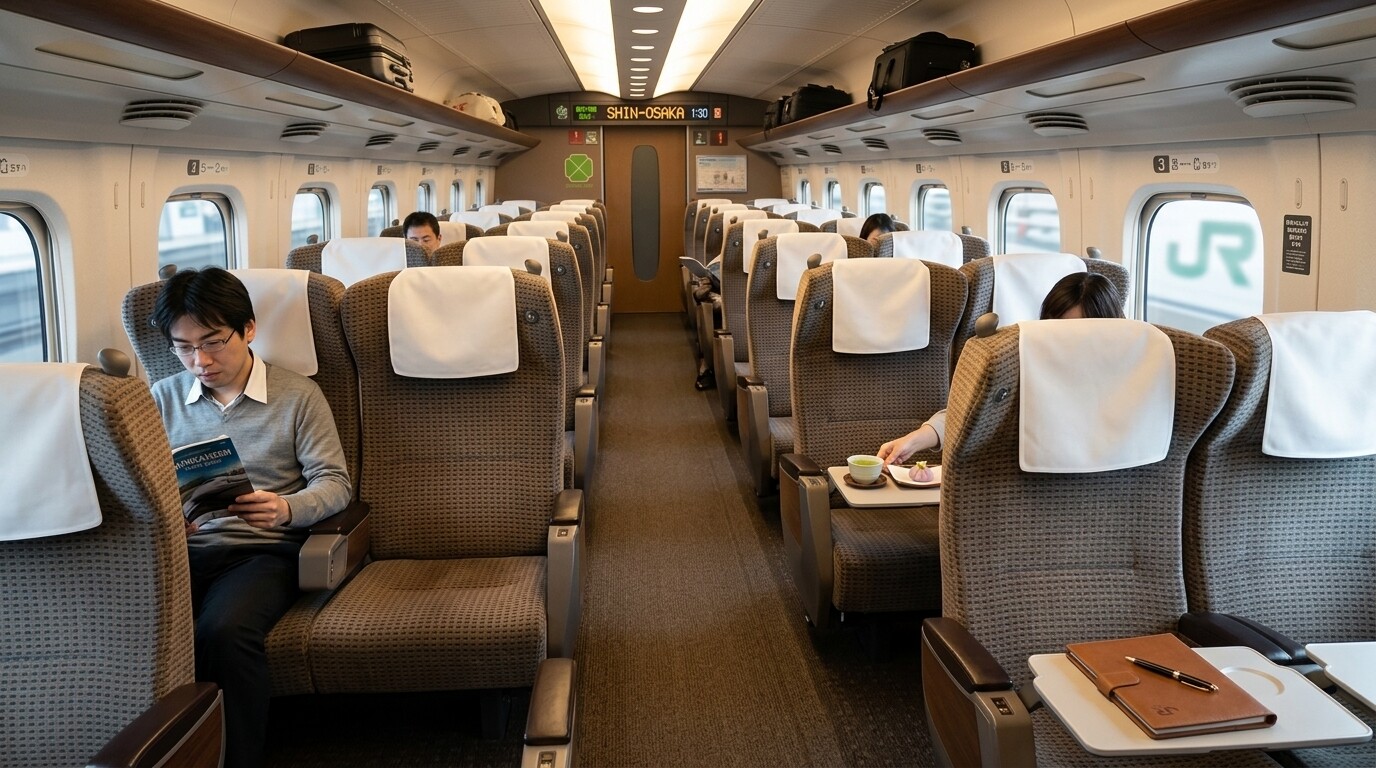
The Hayabusa is the premier all-reserved super-express service. It offers the fastest travel time between Tokyo and Shin-Hakodate-Hokuto (about 4 hours), making limited stops. It features luxurious Gran Class seating (equivalent to first-class-plus), Green Cars (first class), and Ordinary Reserved cars. This is the top choice for priority on speed and comfort for a direct journey to Hokkaido.
Hayate (E5/H5 Series)
The Hayate is an all-reserved rapid service that operates between Morioka/Shin-Aomori and Shin-Hakodate-Hokuto. It makes more intermediate stops than the Hayabusa, serving more local stations along the route. It does not offer Gran Class but has Green Car and Ordinary Reserved seating. It is ideal for travelers starting from northern Tohoku cities or those needing to access stations between Shin-Aomori and Shin-Hakodate-Hokuto.
Hokkaido Shinkansen Route Map
How to read the map:
Connection point: Shin-Aomori – This is the northern terminus of the Tohoku Shinkansen and the gateway station where trains transfer onto the Hokkaido Shinkansen line.
Undersea section: Seikan Tunnel – The line travels through this engineering marvel beneath the Tsugaru Strait to connect Honshu and Hokkaido.
Hokkaido gateway: Shin-Hakodate-Hokuto – The current northern terminus of the Hokkaido Shinkansen in Hokkaido. Here, passengers transfer to conventional limited express trains to reach Hakodate city, Sapporo, and other areas in Hokkaido.
Popular Hokkaido Shinkansen Routes
Tokyo → Shin-Hakodate-Hokuto
Best for who: Travelers heading directly to Hokkaido, prioritizing the fastest rail connection to the island.
Which train to pick: Hayabusa is the best and only direct Shinkansen service for this route.
Seat tip: Book Gran Class for the ultimate luxury experience or a Green Car seat for extra comfort on the long journey. Ordinary Reserved seats are comfortable and spacious. Reservations are mandatory for all Hayabusa services.
Tokyo → Hakodate
Best for who: Tourists whose final destination is the historic port city of Hakodate.
Which train to pick: Take the Hayabusa to Shin-Hakodate-Hokuto Station, then transfer to a local rapid train for the final 15-20 minute ride to Hakodate Station.
Seat tip: A reserved seat on the Hayabusa is recommended. The transfer at Shin-Hakodate-Hokuto is quick and convenient.
Sendai/Morioka → Shin-Hakodate-Hokuto
Best for who: Travelers exploring the Tohoku region before heading to Hokkaido.
Which train to pick: You can take a Tohoku Shinkansen (e.g., Hayabusa or Hayate) to Shin-Aomori, then transfer to a Hokkaido Shinkansen Hayate service for the remainder of the journey. Some through-service Hayabusa trains from Tokyo may also stop at these stations.
Seat tip: Check your train's service pattern. If taking a Hayate from Shin-Aomori, reserving a seat is advised, especially during peak travel seasons.
Hokkaido Shinkansen Extension to Sapporo: When It's Expected to Open
Future terminus: The line is under active construction to extend north from Shin-Hakodate-Hokuto to Sapporo, Hokkaido's largest city and capital.
Latest projected opening timeframe: The official target for the full opening to Sapporo is set for FY 2030 (by the end of March 2031). The extension will include new intermediate stations such as Oshamanbe, Kutchan, and Shin-Otaru.
Recent updates and challenges: Construction has faced significant challenges, including difficult terrain (mountains and soft ground), complex tunneling work (notably the long Oshima Tunnel), and escalating costs. These factors have contributed to delays from earlier, more optimistic projections. Environmental assessments and securing stable funding remain ongoing concerns that could potentially affect the timeline.
Hokkaido Shinkansen FAQ
Where does the Hokkaido Shinkansen connect? Can I transfer easily?
Currently, the Hokkaido Shinkansen connects Shin-Aomori Station (Aomori Prefecture, Honshu) to Shin-Hakodate-Hokuto Station (Hokkaido). Transfers are designed to be very easy. At Shin-Aomori, you can seamlessly transfer to/from the Tohoku Shinkansen for services to Tokyo, Sendai, etc. At Shin-Hakodate-Hokuto, the station is integrated with conventional rail lines for quick transfers to Hakodate, Sapporo, and other Hokkaido destinations.
Does the Hokkaido Shinkansen go to Sapporo yet?
No, not yet. As of now, the Hokkaido Shinkansen terminates at Shin-Hakodate-Hokuto Station. To reach Sapporo, you must transfer to a conventional limited express train (like the Hokutoor Super Hokuto) for the remaining approximately 3.5 to 4-hour journey. The direct Shinkansen line to Sapporo is scheduled to open around 2030/2031.
Should I take Hayabusa or Hayate?
Choose Hayabusa if you are traveling directly from Tokyo or want the fastest possible service with the most luxurious seating options (Gran Class). Choose Hayate if you are boarding at a station north of Shin-Aomori (like Morioka) or need to disembark at an intermediate station between Shin-Aomori and Shin-Hakodate-Hokuto that the Hayabusa does not stop at. The Hayate is also a good option if Gran Class is not a priority.
The Hokkaido Shinkansen has dramatically improved access to Japan's northern island, compressing travel time and offering a comfortable, scenic journey that includes the unparalleled experience of crossing under the sea. While the current terminus is at Shin-Hakodate-Hokuto, the upcoming extension to Sapporo promises to further revolutionize travel in Hokkaido. By understanding the differences between the Hayabusa and Hayate services and planning your route, you can make the most of this engineering marvel on your next Japanese adventure.