Golden Week 2026 Shinkansen: May 5 U-Turn Rush Peak Guide
This guide is currently shown in English because a translation is not available yet.
Golden Week 2026: U-Turn Rush Expected to Peak on May 5 — Shinkansen and International Flights Face Heaviest Crowds
Last updated: May 4, 2026, 22:09 UTC
Category: Rail News · Service Update
Region: Japan-wide
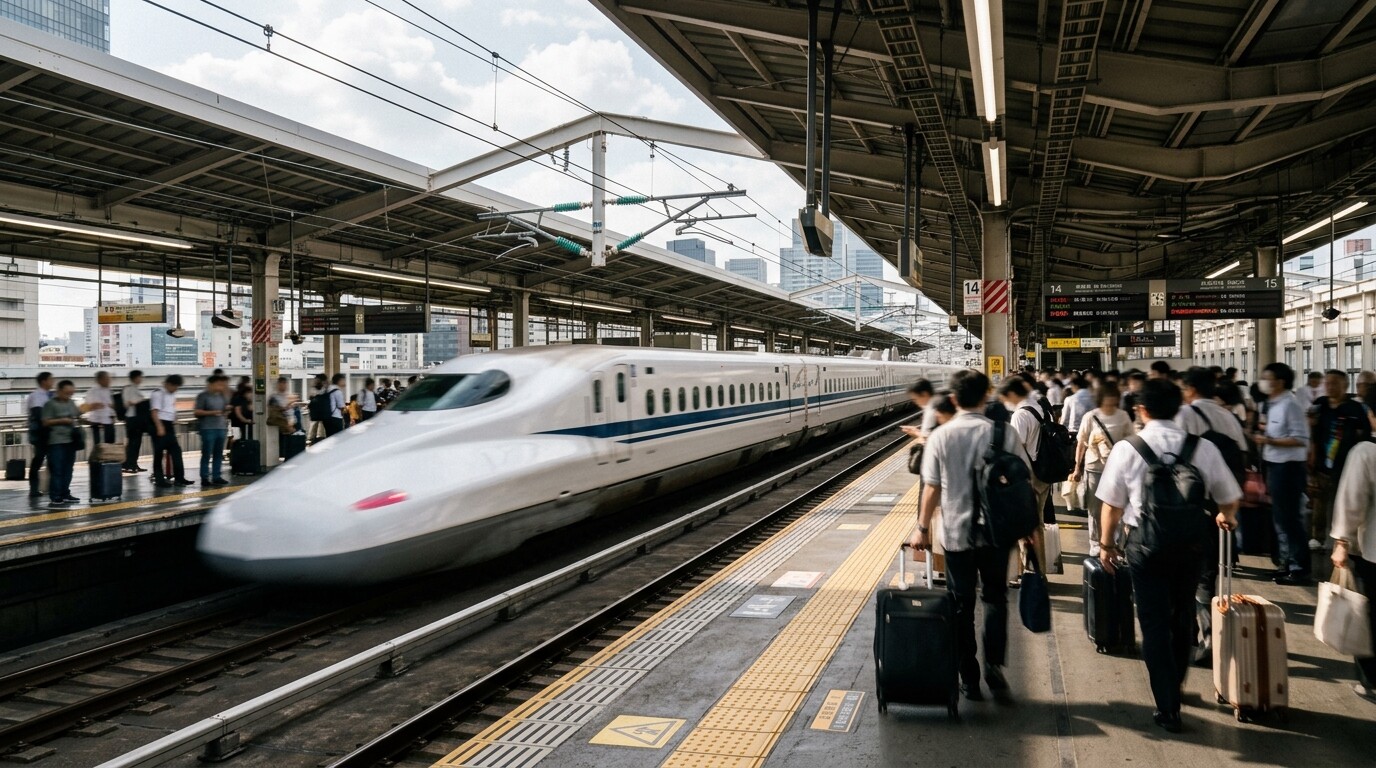
The annual U-turn rush that accompanies the latter half of Japan's Golden Week holiday period is forecast to reach its peak on Tuesday, May 5, 2026, according to a report published by NHK on the evening of May 4. Travelers returning to major urban centers — particularly Tokyo — should expect significant congestion on expressways, Shinkansen services, and international air routes throughout the day. Expressway traffic authorities project backups exceeding 30 kilometers on major highway corridors during the afternoon hours.
What Happened
Japan's Golden Week is one of the country's three major holiday clusters, spanning late April through early May each year. In 2026, the extended holiday period saw millions of residents travel to hometowns, resort destinations, and leisure spots across the country. As the holiday draws to a close, the predictable return migration — known in Japanese as the U-turn rush (Uターンラッシュ) — is now underway.
According to the NHK report published at 22:09 UTC on May 4, 2026, the peak of this return-travel surge is expected to fall on May 5 (Tuesday). The report draws on information provided by JR (Japan Railways) group companies and airline operators, who have indicated that both upbound Shinkansen services (i.e., trains heading toward Tokyo and other major destinations) and international flights arriving in Japan will see their heaviest passenger volumes on this date.
On the road network, national expressway operators anticipate that congestion on major highway routes will build throughout the morning and extend into the afternoon, with traffic jams exceeding 30 kilometers in length projected at various bottleneck points across the country.
Context: Golden Week 2026 Holiday Calendar
The 2026 Golden Week period includes the following national holidays:
- April 29 (Wednesday) — Shōwa Day (Showa no Hi)
- May 3 (Sunday) — Constitution Memorial Day (Kenpō Kinenbi)
- May 4 (Monday) — Greenery Day (Midori no Hi)
- May 5 (Tuesday) — Children's Day (Kodomo no Hi)
With May 5 being the final designated holiday, many travelers who departed for domestic or international destinations earlier in the week are expected to converge on transportation hubs simultaneously on this date, creating the conditions for peak congestion.
Affected Services
The NHK report identifies several categories of transportation services that will be most heavily affected on May 5. Below is a summary based on the information provided in the source.
Shinkansen (Bullet Train) Services
According to JR group companies cited in the report, upbound Shinkansen services — those traveling toward Tokyo (上り, nobori) — will face peak crowding on May 5. While the source does not specify individual line-by-line breakdowns, the following major Shinkansen corridors are historically the most affected during Golden Week U-turn rushes:
- Tōkaidō Shinkansen (Tokyo ↔ Shin-Osaka) — connecting major western Japan cities to Tokyo
- Tōhoku Shinkansen (Tokyo ↔ Shin-Aomori) — serving travelers returning from northeastern Japan
- Hokuriku Shinkansen (Tokyo ↔ Kanazawa/Tsuruga) — carrying passengers from the Hokuriku region
- Kyūshū Shinkansen (Hakata ↔ Kagoshima-Chūō) — with connecting services to the Tōkaidō Shinkansen
- Hokkaido Shinkansen (Shin-Aomori ↔ Shin-Hakodate-Hokuto) — linking Hokkaido to the Tōhoku corridor
The source did not provide specific train-by-train schedules, seat availability percentages, or individual service disruption details. Travelers are advised to consult their specific JR operator for real-time seat reservation status.
Expressway and Road Network
National expressway operators anticipate that congestion across Japan's highway network will build significantly during the morning and afternoon hours of May 5. The source projects that traffic backups exceeding 30 kilometers will form on major routes during the afternoon. Specific highway segments were not identified in the NHK report, but historically affected corridors during Golden Week include:
- The Tōmei Expressway (connecting Nagoya to Tokyo)
- The Kan-Etsu Expressway (connecting Niigata to the greater Tokyo area)
- The Chūō Expressway (connecting Nagoya/northern Japan to Tokyo)
- The San'yō Expressway and connecting routes from western Japan
Note: The above highway examples are provided for general context based on historical patterns. The NHK source did not name specific expressway segments.
International Air Travel
The report also notes that international flights arriving in Japan will see peak congestion on May 5. This likely reflects both returning Japanese residents and inbound tourists concluding Golden Week trips abroad. The source did not specify which airports, airlines, or individual routes are most affected.
Domestic Air Services
While the NHK report specifically highlights Shinkansen and international flights, it does not provide detailed information about domestic air service crowding. Historically, domestic flights on routes such as Tokyo–Sapporo, Tokyo–Fukuoka, and Tokyo–Okinawa also experience heavy demand during U-turn rush periods, but this detail is not confirmed by the source.
What Travelers Should Do
Based strictly on the information provided in the NHK source report, the following guidance can be offered to travelers navigating the May 5 U-turn rush:
For Shinkansen Passengers
- Expect heavy crowds on upbound (toward Tokyo) Shinkansen services on May 5. If you hold reserved-seat tickets, confirm your booking in advance and arrive at the station with ample time.
- Non-reserved seating (自由席) will likely be extremely crowded. JR companies have historically added extra cars or temporary services during peak periods, but the source did not confirm specific additional services for May 5, 2026.
- Consider shifting your return date if possible. While the source does not make this recommendation explicitly, the fact that May 5 is identified as the peak day implies that traveling on May 6 or later may result in less congestion. This is a logical inference rather than source-stated advice.
For Expressway Drivers
- Anticipate severe afternoon congestion on major expressways. The source projects traffic jams exceeding 30 kilometers on highway routes.
- Depart early in the morning if driving is unavoidable. While the source does not give specific departure-time advice, it notes that congestion is expected to build toward the afternoon, suggesting early-morning travel may encounter lighter traffic.
- Check real-time traffic information from expressway operators. The source does not name specific information services, but Japan's major expressway operators (NEXCO East, Central, and West) provide live traffic updates through their websites and mobile applications.
For International Air Travelers
- Arrive at the airport well ahead of your scheduled departure. With peak crowding expected on international flights arriving in Japan on May 5, airports may experience longer-than-usual processing times at immigration and customs.
- Confirm flight status directly with your airline. The source does not provide specific airline or flight-number information.
General Advice
- Stay informed. Monitor official transportation operator channels for real-time updates throughout May 5.
- Allow extra travel time. Regardless of your mode of transport, build additional buffer time into your schedule to account for the anticipated congestion.
- Stay hydrated and prepared. While not mentioned in the source, extended travel times during warm May weather warrant basic preparation, including water, snacks, and any necessary medications.
Official Source
| Source label | 权威媒体 (Authoritative media) |
|---|---|
| Original Japanese headline | 大型連休後半 Uターンラッシュがピークの見込み |
| Published at | May 4, 2026, 22:09 UTC |
| Source site | NHK News Web (www3.nhk.or.jp) |
| Source URL | http://www3.nhk.or.jp/news/html/20260505/k10015114731000.html |
Editor's note: This article is based on the NHK report cited above. For the most current and detailed service information — including specific train schedules, seat availability, and real-time congestion updates — travelers should consult the official websites and social media channels of the relevant JR operating companies, expressway operators, and airlines directly.
Frequently Asked Questions
When is the peak of the 2026 Golden Week U-turn rush?
According to the NHK report published on May 4, 2026, the U-turn rush is expected to peak on May 5, 2026 (Tuesday), which is Children's Day (Kodomo no Hi) and the final national holiday of the Golden Week period.
Which Shinkansen services will be most crowded?
The source states that upbound Shinkansen services (trains heading toward Tokyo) will face peak crowding on May 5. The report does not specify which individual Shinkansen lines are most affected, but all major routes feeding into Tokyo — including the Tōkaidō, Tōhoku, and Hokuriku Shinkansen — are historically subject to heavy demand during this period.
How bad will expressway congestion be?
The NHK report indicates that national expressway operators expect traffic jams exceeding 30 kilometers to form on major highway routes during the afternoon of May 5. Specific highway segments were not named in the source.
Are international flights to Japan also affected?
Yes. The source reports that international flights arriving in Japan will also see peak crowding on May 5. Specific airports and routes were not identified in the report.
Is there anything I can do to avoid the rush?
The source does not provide explicit avoidance strategies. However, since May 5 is identified as the peak day, travelers with flexible schedules may find less congestion by traveling on May 6 or later. For real-time service updates, consult the official channels of your transportation operator.
Related Information
- Shinkansen Schedules and Timetables
- How to Reserve Shinkansen Seats
- Golden Week Travel Tips for Rail Passengers
- Latest Service Updates and Disruptions
- Shinkansen Route Guide
- Navigating Crowded Stations During Peak Travel Periods
This article was prepared based on information available as of May 4, 2026, 22:09 UTC. Conditions may change. Always verify current service status with official transportation operators before traveling.