How to Ride the Shinkansen: Japan Bullet Train Guide & Tips
This guide is currently shown in English because a translation is not available yet.

How to Ride the Shinkansen: A Complete Guide to Japan’s Bullet Trains
Japan's Shinkansen, or bullet train, is more than just transportation—it is a global icon of efficiency, punctuality, and technological excellence. Connecting major metropolises like Tokyo, Kyoto, and Osaka at speeds of up to 320 km/h (200 mph), the Shinkansen is the preferred choice for domestic travel. This comprehensive guide simplifies the process of buying tickets, navigating stations, and boarding your train for a stress-free Japanese rail experience.
Understanding Shinkansen Ticket Types and Classes
Shinkansen pricing is unique. Unlike local trains, a bullet train journey requires two specific fares, often printed on a single ticket or issued as two separate slips: the Base Fare and the Limited Express Supplement.
Seat Classes and Service Levels
When booking, you must choose between three primary classes of service:
Seat Type Description Best For Non-Reserved (自由席, Jiyūseki) Seating is first-come, first-served in specific cars (usually 1-3). No assigned seat numbers. Budget-conscious travelers and those with flexible schedules. Reserved (指定席, Shiteiseki) Guarantees a specific seat in a designated car. Highly recommended for peace of mind. Most travelers, especially during peak seasons or for long-distance trips. Green Car (グリーン車) The equivalent of First Class. Features a 2+2 layout with wider seats, extra legroom, and premium amenities. Travelers seeking maximum comfort and a quieter environment.
Note: Some lines also offer GranClass, an ultra-premium cabin with airline-style first-class service and gourmet meals.
How to Buy Shinkansen Tickets
Whether you prefer booking in person or online, there are three main ways to secure your seat:
1. At the Station (Ticket Machines & Offices)
Major JR stations feature Multilingual Ticket Vending Machines that accept cash and international credit cards. For complex itineraries or group bookings, visit the JR Ticket Office (Midori-no-madoguchi) to speak with a staff member.
2. Online Reservation Platforms
Official platforms allow you to book Shinkansen tickets online from your smartphone and often provide QR codes for entry, saving time at the station.
3. Using the Japan Rail Pass
The Japan Rail (JR) Pass offers unlimited travel on most trains. While it covers the Shinkansen, pass holders cannot use the "Nozomi" or "Mizuho" trains without paying an additional upgrade fee. Seat reservations for pass holders are free and can be made at ticket machines or offices.
Step-by-Step Guide to Boarding
Japanese stations are designed for high-volume efficiency. Follow these steps to ensure a smooth boarding process.
Step 1: Locate the Shinkansen Gates
Follow the prominent blue Shinkansen signs. In massive hubs like Tokyo Station, pay close attention to the specific line name (e.g., Tokaido Shinkansen vs. Tohoku Shinkansen), as they have separate gate areas.
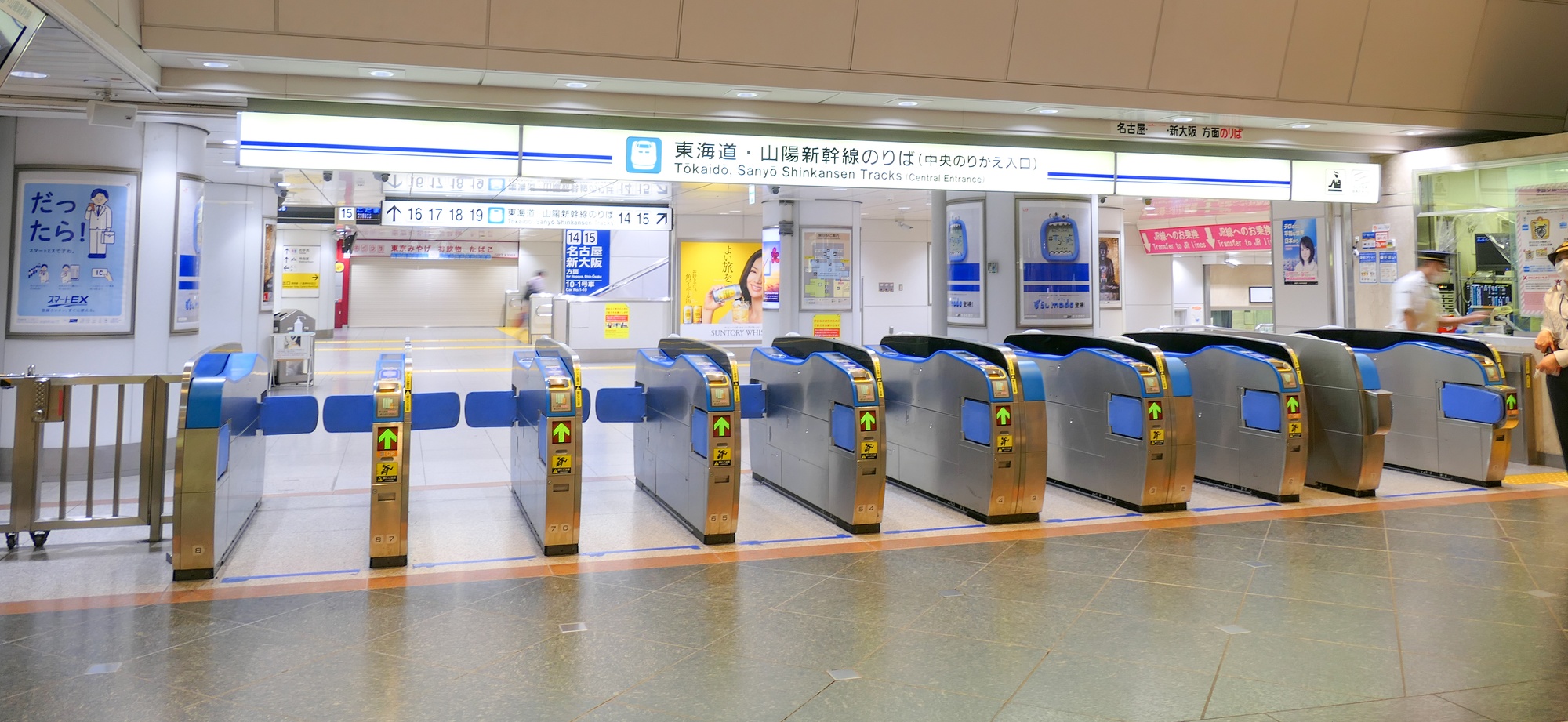

Clear bilingual signage directs passengers to the dedicated Shinkansen gate areas.
Step 2: Passing Through the Ticket Gates
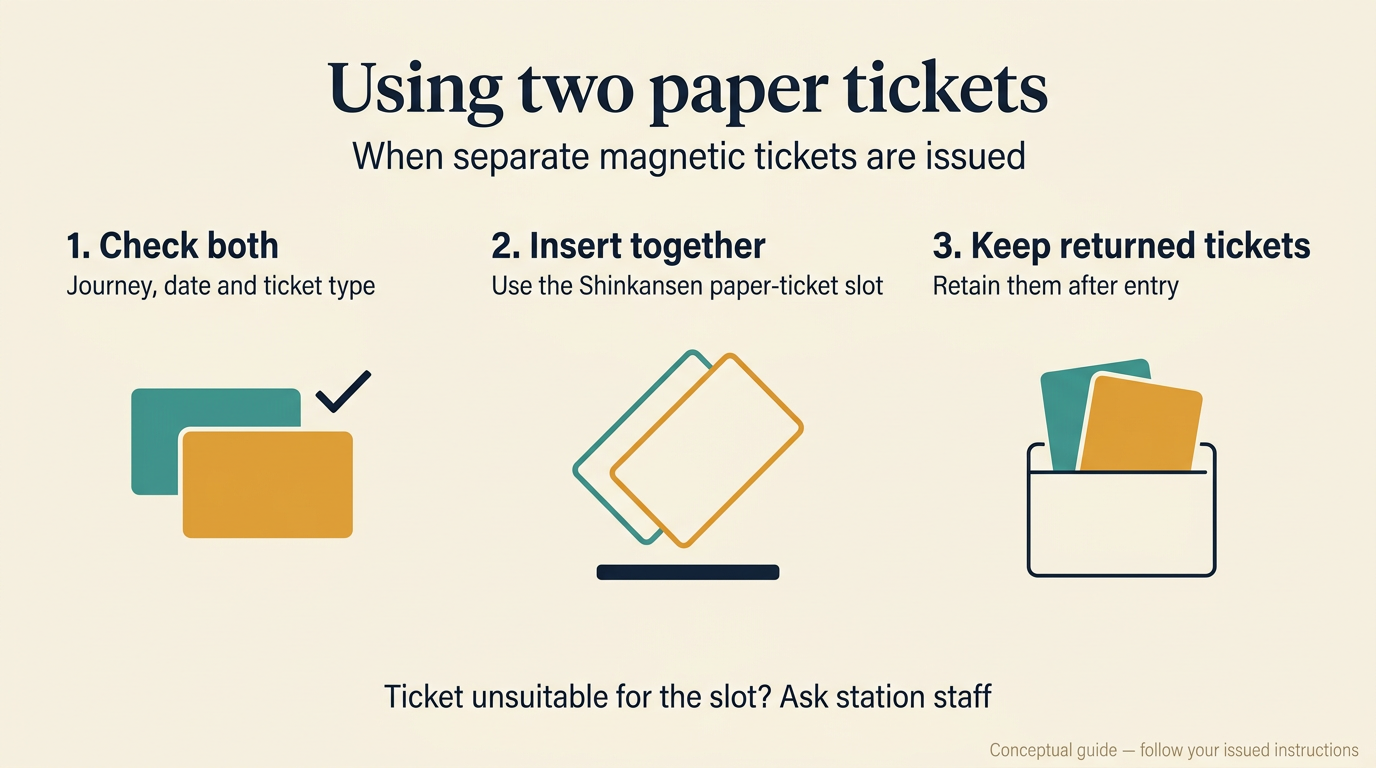
The Shinkansen uses a dual-gate system. If you entered the station through a local gate, you will encounter a second set of "transfer gates." Insert both your Base Fare and Supplement tickets into the slot simultaneously. Don't forget to retrieve them—you will need them to exit at your destination.
Step 3: Finding Your Platform and Car Number
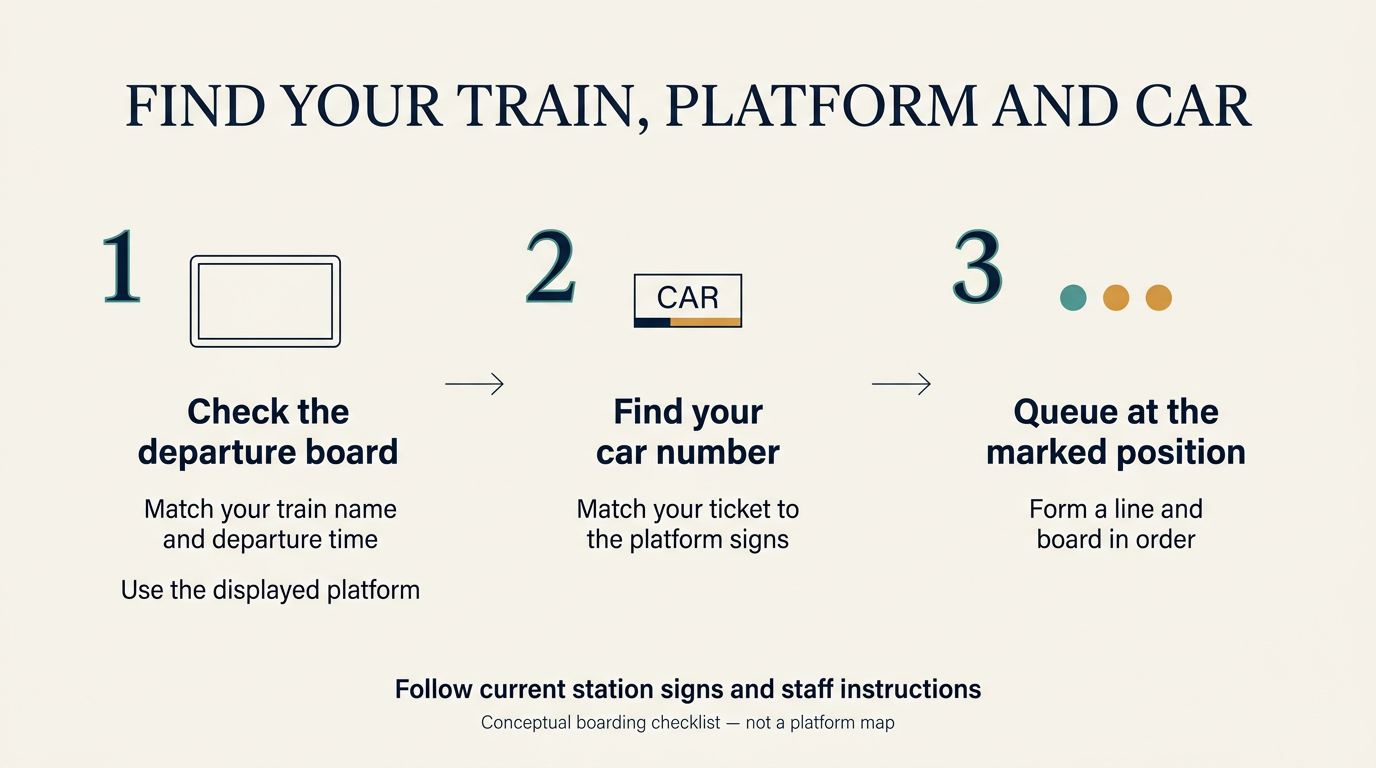
Check the electronic departure boards for your train’s name (e.g., Nozomi 23), departure time, and platform number. Once on the platform, look at the ground or overhead signs to find your specific Car Number (号車, Gōsha). Japanese passengers queue in orderly lines at the designated floor markings.
Step 4: Boarding and Seating
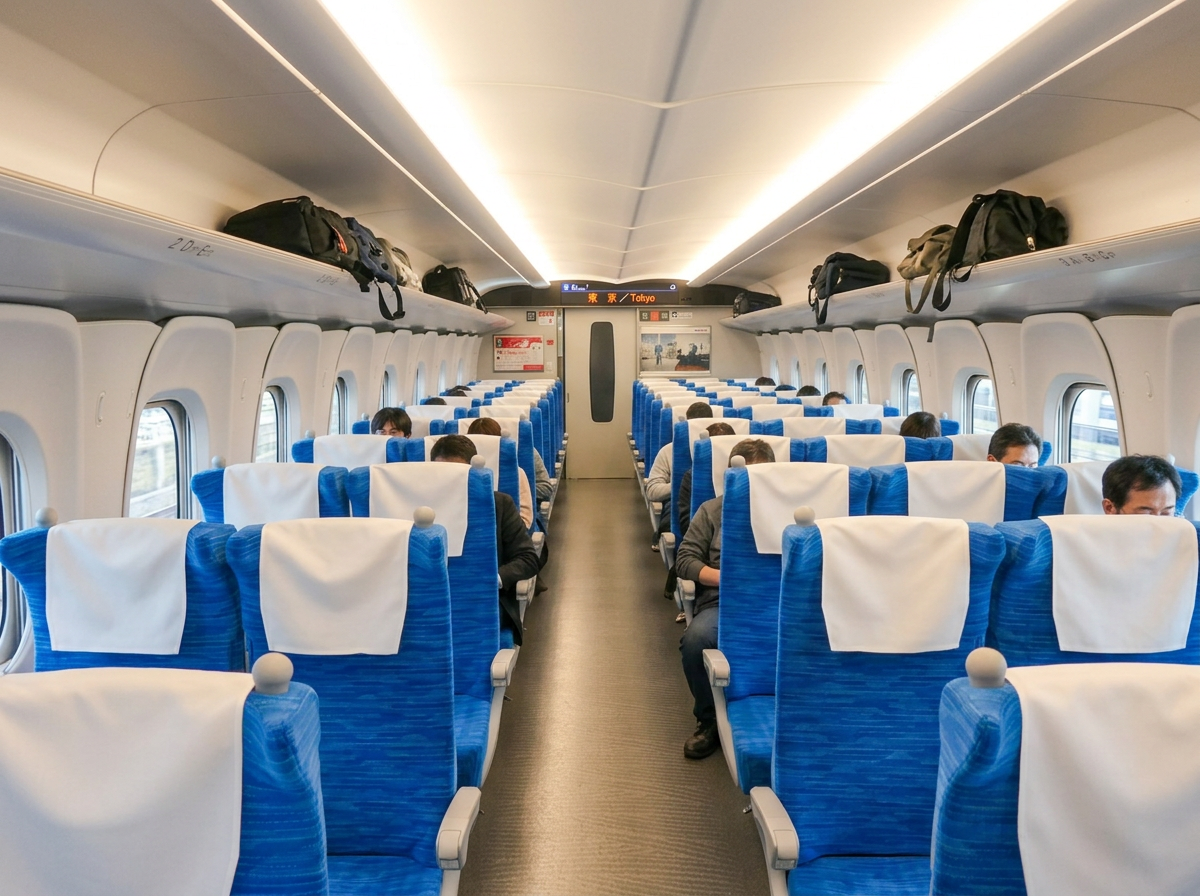
Wait for the train to come to a complete stop and allow arriving passengers to exit first. Once inside, locate your seat (lettered A-E). Overhead racks provide space for small luggage. For oversized baggage, use the designated areas behind the last row of seats (reservation may be required).

Onboard Experience and Etiquette
To maintain the Shinkansen’s famous "Zen" environment, passengers are expected to follow specific etiquette: keep noise to a minimum, set mobile phones to silent mode, and dispose of trash in the bins located between cars.
Conclusion
The Shinkansen is more than a mode of transport; it is the backbone of Japanese travel. By understanding the ticket structure and following the intuitive station signage, you can navigate the country with speed and ease. From the iconic Mount Fuji views on the Tokaido line to the snowy landscapes of Hokkaido, the bullet train ensures your journey is just as memorable as your destination.
Frequently Asked Questions
Q: How is Shinkansen pricing calculated?
A: Shinkansen pricing consists of two parts: the Base Fare for the distance traveled and the Limited Express Supplement for the high-speed service.
Q: What are the different seat classes on the Shinkansen?
A: The Shinkansen offers three main seat types: Non-Reserved (first-come, first-served in specific cars), Reserved (assigned seating), and premium Green Cars or Gran Class for extra comfort.
Q: How fast does the Shinkansen go?
A: Japan's bullet trains reach speeds of up to 320 km/h (200 mph), making them one of the fastest ways to travel between major cities like Tokyo and Osaka.