2025 JR Pass Experience|Tokyo Wide Area & Kansai Wide Area & Hokkaido
The JR Pass (Japan Rail Pass) is an essential topic for any trip to Japan. There are national and regional versions of the JR Pass:
The national version, issued jointly by JR East, JR West, JR Central, JR Kyushu, JR Hokkaido, and JR Shikoku, comes in 7-day, 14-day, and 21-day versions. It's valid nationwide and appears to be the only JR Pass that allows travel on the Tokaido Shinkansen (Tokyo-Shin-Osaka). Of course, this excludes the Nozomi and Mizuho trains, which are the fastest and have the fewest stops. It costs extra and is suitable for those with longer vacations, plans to visit multiple cities, and need to travel across multiple regions (possibly with an additional train), and those who prefer not to fly. The price is quite high; the basic 7-day version costs JPY 50,000.
The regional version, issued by a specific JR company, has different coverage areas. Considering that most people don't have such long vacations and generally only visit a single region, choosing the right regional JR Pass may be the most cost-effective option.
This article will introduce several of my personal experiences with regional JR Passes. I hope my experience using the pass provides some valuable insights for those planning a trip. The JR Pass's value for money is evaluated using a common metric: the JR Pass benefit multiplier. This multiplier is calculated by multiplying the theoretical cost of the actual route you use by the actual route you use, dividing it by the purchase price of the JR Pass. If the result is greater than 1, the investment has been recovered; the greater the difference, the better value.
* Regarding the route, I use a recording logic that records each route as a single one whenever I change trains. Therefore, for routes like "Asakusabashi - Chuo-Sobu Line - Akihabara - Yamanote Line - Tokyo," I split them into two records. This approach will increase the theoretical cost, but these are generally short-distance routes, and the majority of JR Pass fares are for direct Shinkansen and limited express trains. Therefore, while the impact will be relatively limited, it will be relatively small.
** For the theoretical cost, enter your boarding and alighting stations in Google Maps and record the route and price based on the route output.
1. Tokyo Wide Pass (3-Day) | JR East | Recommended Rating: ⭐️⭐️⭐️⭐️
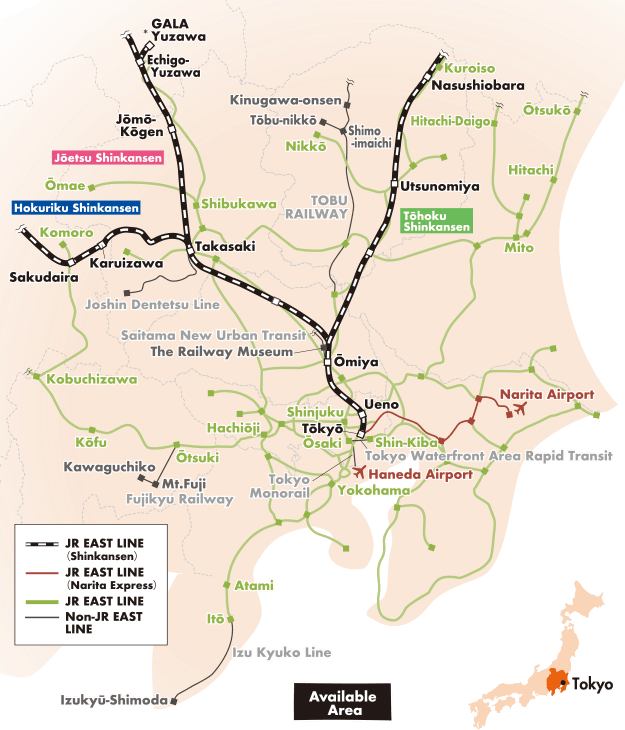
1.1 Tokyo Wide Pass The Tokyo Wide Pass is issued by JR East and, as the name suggests, is valid for travel within the Tokyo area (roughly within 200km of Tokyo). It allows travel on the Tohoku, Hokuriku, and Joetsu Shinkansen lines, as well as private railway lines such as the Tobu Nikko Line, Izu Kyuko Line, and Fuji Kyuko Line. The official website's description, "Recommended for travelers traveling to Tokyo's suburbs, such as Nikko," perfectly captures the key to using it:
- Planning a trip to Tokyo's suburbs at least 100km from Tokyo (from Asakusa Station to Nikko City in Tochigi Prefecture, taking a Tobu Limited Express is about 130km). This requires Shinkansen/Limited Express travel, which is key to achieving a return on investment.
- Priced at JPY 15,000 per person, it can only be used for three consecutive days. Based on train fares within the 200km radius, at least two round trips on the Shinkansen/Limited Express are required to achieve a return on investment. (When the pass was only JPY 10,180, a single round trip was enough to break even, but with the significant price increase, two round trips are required.)
Where the Tokyo Wide Pass is valid

I've used the Tokyo Wide Pass twice, and I'll briefly describe my experiences with both.
1.2 The first time was in January 2024. I didn't book in advance, but landed at Haneda Airport around 1:00 PM on January 30th. I purchased it at the JR East Travel Service Center (2F Arrivals, Tokyo Monorail side) for JPY 15,000 per person. I specified the start date of use when purchasing, choosing January 31st to February 2nd. The approximate itinerary for those three days was as follows:
- On January 31st, I took the Hokuriku Shinkansen from Tokyo to Karuizawa (Nagano) and back, with unreserved seats. The theoretical total cost was JPY 10,980.


- On February 1st, I took the Tokaido Main Line to Odawara (Kanagawa) and Atami (Shizuoka). Atami is also a popular destination for 1-2 day trips around Tokyo. It is about 100km away and takes about 2 hours by ordinary train. The one-way ticket is less than JPY2,000.


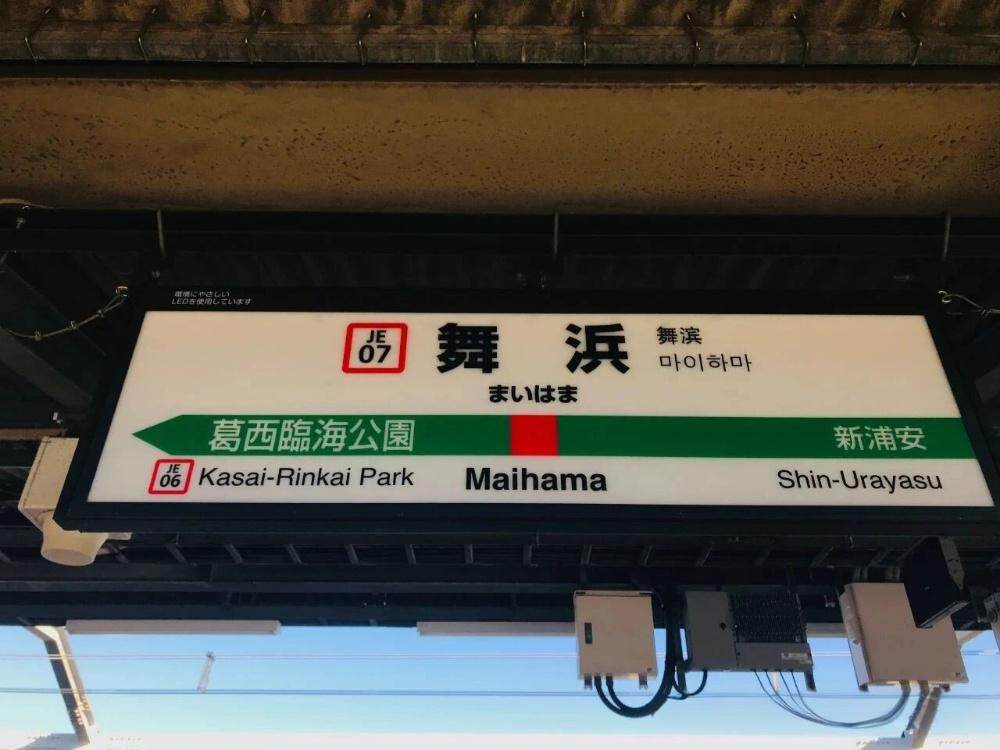
- On February 2nd, I first went to Maihama (Chiba) in the east and walked around the entrance of Disneyland. Then I went to Kichijoji in the west to complete the theme activities of the day: visiting the Ghibli Museum for the second time. Finally, I checked in at the famous station Amagoko (Chiba) in the north.


I used the JR Tokyo Wide Pass 24 times over three days, totaling JPY 19,094, exceeding the ¥15,000 price tag of the JR Tokyo Wide Pass. My main expense was recovered on the Hokuriku Shinkansen. Otherwise, I rode local trains. I didn't bring a computer that time, and I didn't have the time or awareness to book limited express trains or reserved seats at a JR ticket office. My benefits were multiplied by my frantic travel alone.
1.3 The second time was in February 2025. This time, I booked the JR Pass online in advance and reserved seats on the Shinkansen and limited express trains for three days. This was mainly because my trip included Mount Fuji and Lake Kawaguchi, and the Fuji Express train was very difficult to book.
After completing the online reservation, I went to a ticket office at a major JR station and found a machine that accepted passports to retrieve both the JR Pass and the reserved seat ticket. This was quite suitable for a single person. This time, I used the ticket from February 15th to 17th, with one day trip each day. It was quite impressive:
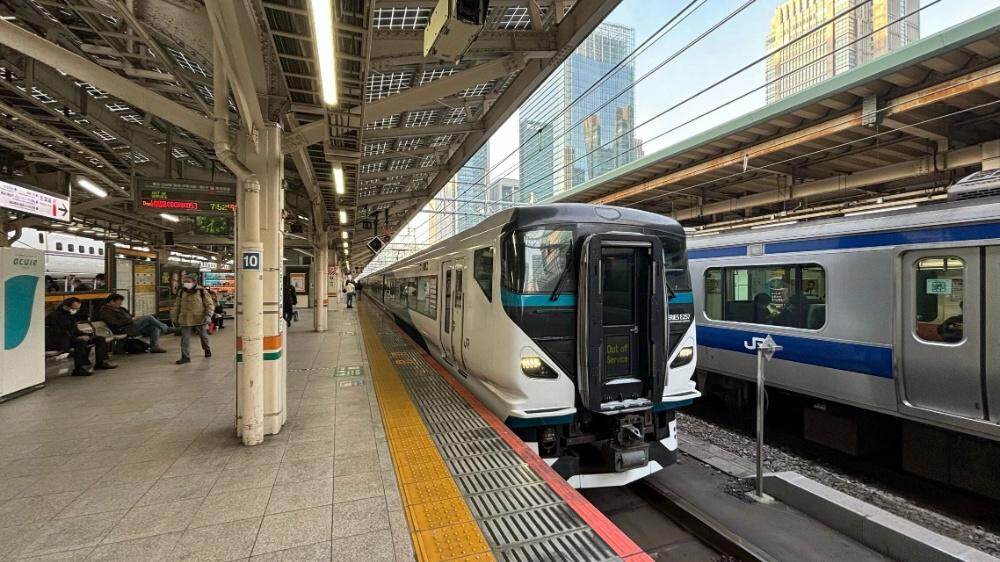
- On February 15th, I took the Odoriko Express to Kawazu (Shizuoka) on the Izu Peninsula. This was probably the first cherry blossoms to appear around Tokyo. Note: There's a more luxurious Sapphire Dancer, and the Tokyo Wide Pass isn't valid.


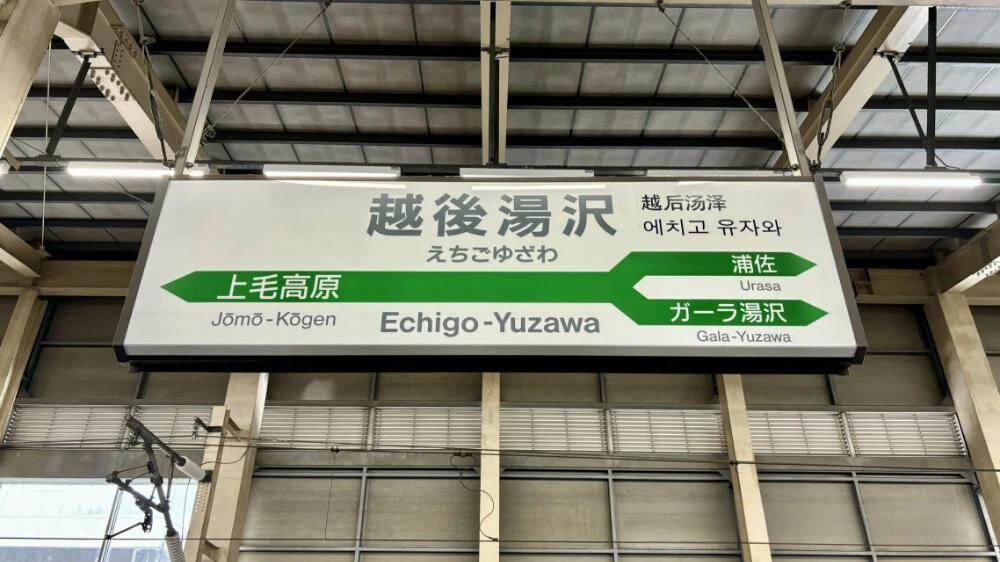
- On February 16th, I took the Joetsu Shinkansen to and from Echigo Yuzawa (Niigata), a snowy country described by Yasunari Kawabata. It's a ski resort, but even if you don't ski, the city walk is great, and the station itself is a great place to stroll.


- On February 17, I took the Fuji Express to Kawaguchiko (Yamanashi). It was a bad day and I didn't see Mount Fuji. I had planned to watch the winter fireworks festival, but considering that I might not be able to catch the last Chuo Main Line Express, I ran away early and went to Shinjuku to eat hot pot.


Using the JR Tokyo Wide Pass for 22 rides over three days would theoretically total JPY 35,470. So, despite the JR Tokyo Wide Pass's steep price increase of JPY 15,000, the utility multiplier has reached a record high of 2.36. This is achieved by taking one day trip each day, either on the Shinkansen or a limited express train.
1.3 Tips on the JR Tokyo Wide Pass:
--Unless you're taking an early morning flight and have the energy to start your travel plans immediately, most flights arrive at Tokyo's Haneda/Narita stations after noon. Therefore, it's not recommended to use the JR Tokyo Wide Pass on your first day, unless you plan to head straight to a nearby resort.
--Considering the increased price of JPY 15,000, at least two round-trip trips within Tokyo's suburbs (over 100 km) are cost-effective. Therefore, if you're planning a 2-3 day leisure trip to places like Karuizawa, Izu, Echigo-Yuzawa, and Nikko, don't consider the JR Tokyo Wide Pass. Pass, it's only for special forces.
--If you have multiple destinations over 100km from Tokyo, consider the JR Tokyo Wide Pass. JR East's online reservation system is quite easy to use. It's best to plan ahead for some limited express trains, which are more difficult to book.
2. Kansai Wide Pass (5-Day) | JR West | Recommended: ⭐️⭐️⭐️⭐️⭐️
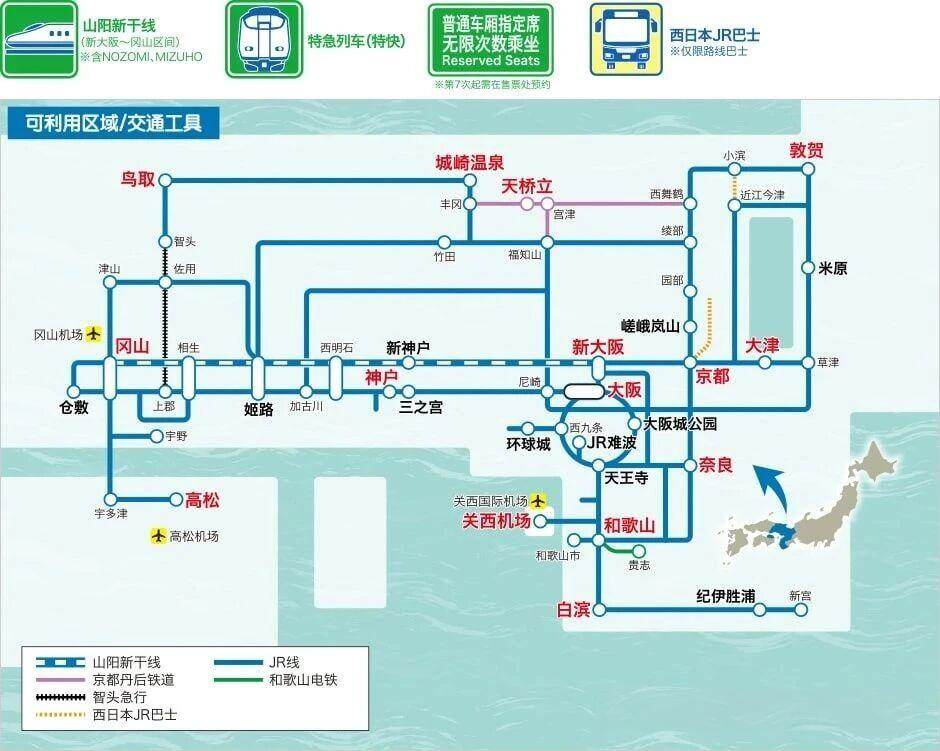
2.1 The Kansai Wide Pass, issued by JR West, is valid for a wide range of areas, south to Shirahama and Kii-Katsuura on the Kii Peninsula, west to Okayama and Takamatsu on Shikoku Island, north to Tsuruga, the western terminus of the Hokuriku Shinkansen, and to Tottori and Amanohashidate on the Sea of Japan. It's valid for 5 consecutive days, and even though the price has increased from JPY 10,000 to JPY 12,000, it still offers excellent value. If this isn't your first trip to the Kansai region and you'd like to explore areas beyond Osaka, Kyoto, and Nara, consider the Kansai Wide Pass, which offers a very low return on investment.
Kansai Wide Rail Pass User Guide

2.2 User Experience
I used the Kansai Wide Pass once. In August 2024, after three years of stagnation, I traveled abroad for the first time, to the Kansai region. I planned a trip to many destinations and booked the pass online for JPY 12,000 per person.
I landed at Kansai Airport around 1:00 PM on August 26th and took the Haruka Limited Express (also purchased on Klook) to Kyoto. I spent three days exploring Kyoto and its surroundings before heading to Osaka on August 29th. I started using the JR Pass. Reserved seats on the Limited Express and Shinkansen were reserved and available at the ticket machines at JR Kyoto Station. The actual period of use was from August 29th to September 2nd:
--On August 29th, I took the new rapid transit line from Kyoto to Osaka, from Umeda to Namba, and then walked back to Shinsaibashi. (The Midosuji Subway Line actually goes directly there, but I had to take a detour to use the JR Pass.)

--August 30th, go to Universal Studios Osaka

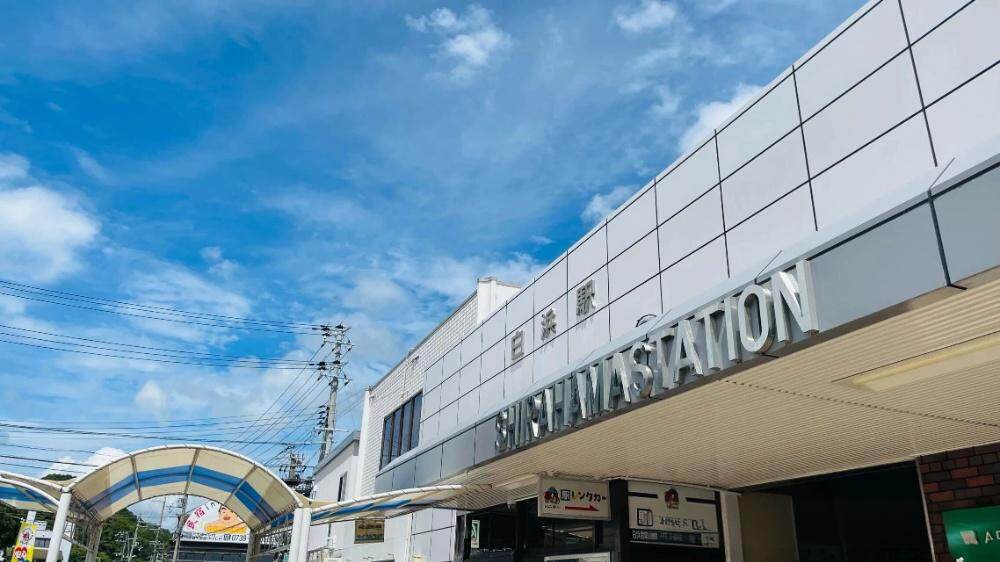
--August 31st, boarded the Kuroshio Express to Shirahama (Wakayama)

--On September 1, I took the Kuroshio Express back to Shin-Osaka

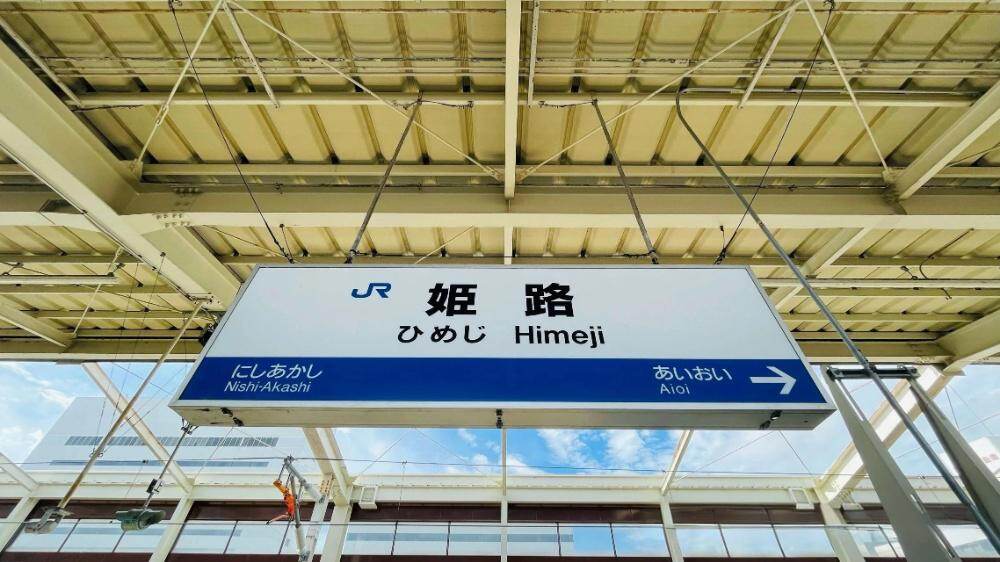
--On September 2nd, I took the Sanyo Shinkansen to Himeji (Hyogo), and then took the Super Hakuto Express to Kobe Sannomiya (Hyogo).


I used the JR Kansai Wide Pass nine times over five days, for a theoretical total of 19,420 yen, exceeding the original price of 12,000 yen. Using the JR Kansai Wide Pass for the first two days was a complete waste; it would have been better to use it a day later. That way, on my return trip on September 3rd, I could have used the Haruka Express to Kansai Airport (at the time, a JR Pass was limited to six reserved seat reservations). Even with this haphazard usage, the benefits were still substantial.
2.3 Tips on the JR Kansai Wide Pass:
--If your travel plan only covers "Kobe-Osaka-Kyoto-Nara," then don't consider the JR Kansai Wide Pass. The 3-day Kansai Mini Rail Pass might be a better choice, costing only JPY 3,000 per person. Furthermore, the Kansai region is dominated by private railways. In the Kobe-Osaka-Kyoto-Nara area, Hankyu, Keihan, Hanshin, and Kintetsu lines compete fiercely, driving down fares. If you don't need to travel long distances, using an IC card is actually a good option.
--The JR Kansai Wide Pass easily pays off, but only if your plans include travel to destinations a reasonable distance (over 100km) from Osaka, such as Wakayama, Himeji, Okayama, Takamatsu, Tottori, Amanohashidate, and Kinosaki Onsen, which require limited express trains or the Sanyo Shinkansen. Note: Travel east of Shin-Osaka is on the Tokaido Shinkansen, operated by JR Central, and is not supported by the JR Kansai Wide Pass. Passes
--Most international flights to the Kansai region land at Kansai Airport (KIX). Unless you plan to head directly to Wakayama, redeeming a JR Pass at Kansai Airport is not recommended. This is because it can be very crowded, both at the self-service machines and at the staff counter. Wakayama is an exception: From Kansai Airport, Hineno is just two stops away, allowing you to connect to trains to Wakayama, eliminating the need to travel to downtown Osaka.
3. Hokkaido Rail Pass (5-Day) | JR Hokkaido | Recommendation: 3 stars
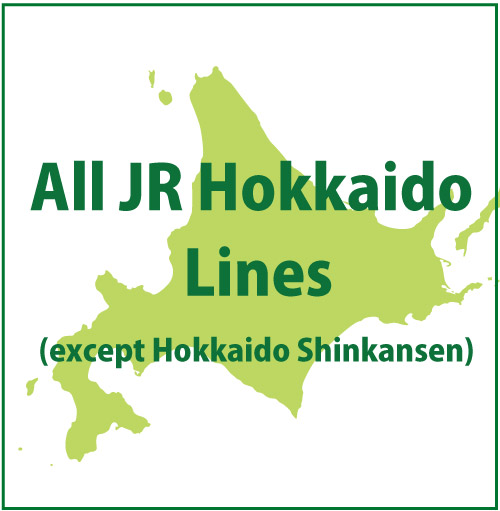
3.1 The Hokkaido Rail Pass is issued by JR Hokkaido and comes in 5-, 7-, and 10-day versions. It is valid on all lines within JR Hokkaido, except for the Shinkansen. Hokkaido is vast and sparsely populated, with many worthwhile destinations, but they're quite scattered. In central Hokkaido, there's Sapporo-Otaru-Noboribetsu-Lake Toya; in southern Hokkaido, there's Hakodate; in eastern Hokkaido, there's Kushiro-Shiretoko-Abashiri; and in northern Hokkaido, there's Asahikawa-Furano-Wakkanai (though Wakkanai might be a bit too far north). The JR Hokkaido rail network is essentially radial, centered around Sapporo. This makes the 5-day JR Pass somewhat worthless. First, it's expensive, costing JPY 22,000 per person after the price increase. To break even at this price, you'd need at least one round-trip express train from Sapporo to a city more than 300km away. Second, the express train takes 4-5 hours one way. After spending 2-3 days exploring a destination and then returning, it's unlikely you'll be able to explore other areas. The benefits aren't maximized, so a longer trip, allowing you to visit at least two areas, is ideal. The 7-day or 10-day versions are likely more cost-effective.
About the Hokkaido Rail Pass

3.2 I once used a 5-day Hokkaido Rail Pass. I booked the JR Hokkaido Rail Pass and a reserved seat on a limited express train online in advance. On January 1, 2025, on the morning of New Year's Day, I flew from Tokyo's Haneda Airport to Sapporo New Chitose. After landing, I picked up the Hokkaido Rail Pass and my reserved seat at the JR New Chitose Airport Station Tourist Information Center. (JR Hokkaido doesn't seem to have self-service kiosks that accept passports; you have to go to designated JR stations to do it manually.) Since the holiday was only 5 days long, the valid period was from January 1st to January 5th:
- January 1st, New Chitose Airport to Sapporo, Express AIRPORT


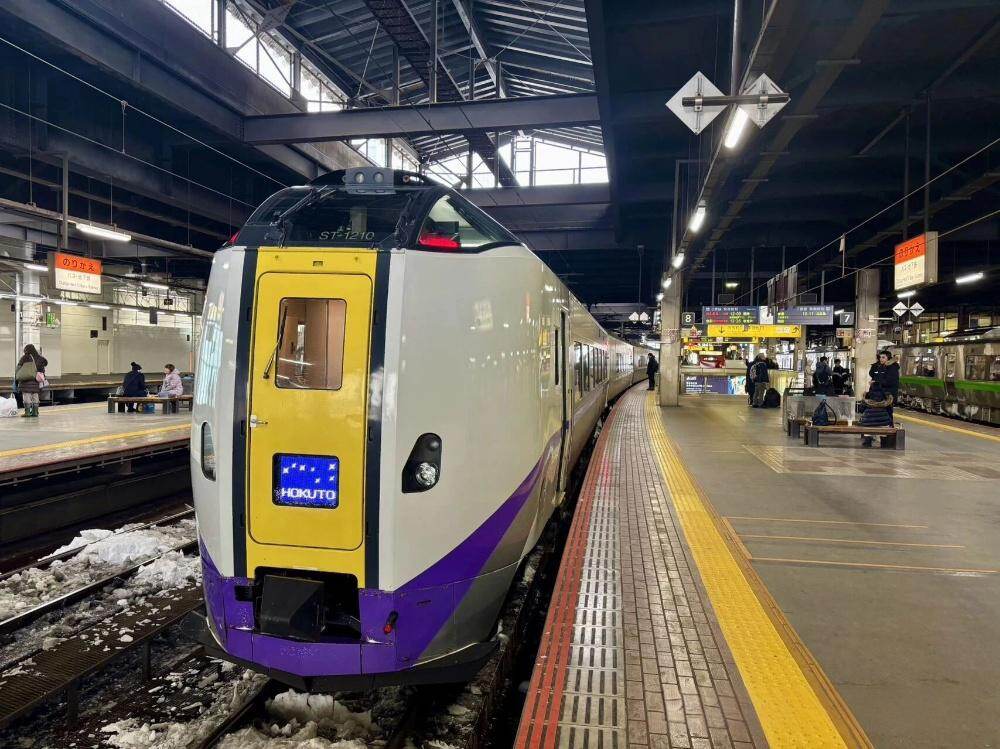
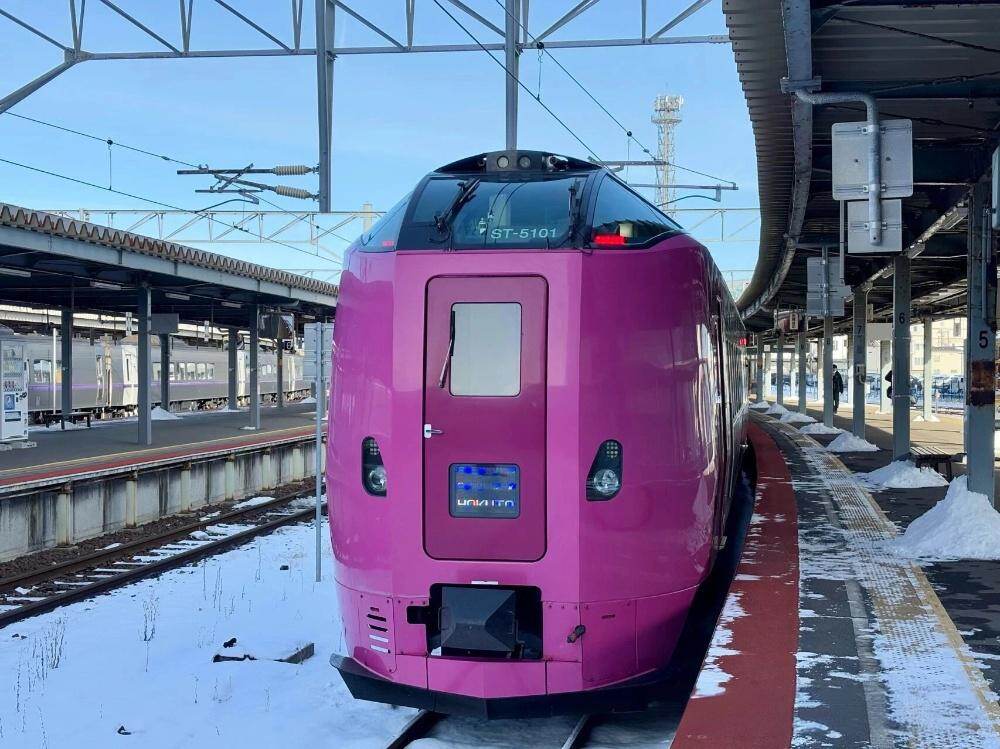
- January 3, Sapporo to Hakodate, Hokuto Express

- On January 4th, I took the Hokuto Express from Hakodate to Onuma Park. Onuma Park is a suburb of Hakodate, and the ride takes about half an hour. You can see Mount Komagatake.

On January 5th, I originally planned to take the Hokuto Express from Hakodate to Toya and then to Minami-Chitose. However, when I checked out that morning, I left my JR Pass in the room and it was cleaned. I couldn't enter the station with only a reserved seat ticket, so I had to buy a one-way ticket. I still followed the planned route, but it cost me a lot more.


I used the JR Hokkaido Rail Pass nine times over four days, for a theoretical total of JPY 17,960 and a benefit multiplier of 0.90. This was the only time I didn't actually get my money's worth. So, be sure not to lose your JR Pass. Although you need to provide your passport when purchasing, it's only for eligibility verification, not a real-name system, and there's no replacement if lost. If I had completed my January 5th trip as planned, the Hokuto Express from Hakodate to Toya (JPY 6,250), the Hokuto Express from Toya to Minami Chitose (JPY 5,440), and the Minami Chitose to New Chitose Airport (JPY 230) would have cost me JPY 29,880. Back then, before the JR Hokkaido Rail Pass price increase, it was JPY 20,000, so the benefit multiplier would have been 1.49, a decent price.
3.3 Tips for the JR Hokkaido Rail Pass:
--Hokkaido is a vast and sparsely populated area. The JR rail network radiates out from Sapporo. Before deciding whether to purchase a JR Pass, carefully consider your planned destinations. If your planned destinations are limited to Sapporo, Otaru, Asahikawa, Furano, and Noboribetsu, JR Hokkaido offers two other passes at half the price.
--JR Hokkaido Rail The pass is suitable for those who start their trip in Sapporo and return to Sapporo, and plan to visit Hakodate in southern Hokkaido, Kushiro/Shiretoko/Abashiri in eastern Hokkaido, or Wakkanai in northern Hokkaido (those who only go to Asahikawa and Furano are not eligible). Because JR Hokkaido's line network is very sparse, the pass primarily covers limited express trains departing from Sapporo.
--If your destination isn't Sapporo but southern or eastern Hokkaido, my advice is to avoid flying directly to Sapporo. Instead, consider flying to Tokyo from within Japan and then connecting in Tokyo to Hakodate, Kushiro, or Memanbetsu. ANA/JAL often offer discounts on connecting flights within Japan, eliminating the need for the JR Hokkaido Rail Pass.