Tokyo to Osaka: Train, Flight, Bus & Driving Guide

For many city-centre itineraries, the Tokaido Shinkansen is the simplest Tokyo-to-Osaka option. Board at Tokyo or Shinagawa and arrive at Shin-Osaka, then continue to your Osaka neighbourhood. An overnight bus can suit a smaller budget, a flight can fit an airport-based itinerary, and local trains or a rental car make more sense when stops along the way are part of the trip.
Compare the whole journey: hotel-to-station or airport access, the main service, baggage, transfers and arrival at your accommodation. A low headline fare or short flight time does not by itself identify the best trip. The cover is an editorial transport montage, not a navigation map.
Contents: Shinkansen · Highway buses · Flights · Local trains · Driving · FAQ
| Option | When it fits | What to check before paying |
|---|---|---|
| Shinkansen | A direct high-speed rail journey between Tokyo/Shinagawa and Shin-Osaka | Train, seat, baggage space, final Osaka transfer and full ticket price |
| Flight | An itinerary already near an airport or connecting to another flight | Exact airport pair, access, check-in, baggage and arrival transfer |
| Highway bus | A budget-focused trip, including an overnight option if suitable | Boarding-point map, seat layout, scheduled arrival, luggage and facilities |
| Local/rapid trains | A slow journey with planned regional stops | Every connection, final arrival, ticket validity and any seasonal-pass rules |
| Rental car | A road trip with destinations better reached by car | Licence eligibility, one-way return, tolls, fuel, insurance and parking |
Tokyo to Osaka by Shinkansen
The Tokaido Shinkansen connects Tokyo, Shinagawa and Shin-Osaka. Osaka Station in Umeda does not have Shinkansen platforms. Choose your Tokyo boarding station based on your starting point, and plan the onward JR or Metro journey from Shin-Osaka. Our Shin-Osaka station guide explains the gates and transfers.
Advantages and trade-offs
Rail avoids airport check-in and can be convenient for central-city travel. You still need time to find your platform and complete any ticket collection. Trains can be delayed or suspended by weather and other disruptions; do not assume a connection is risk-free. Fares, reservation rules and cancellation terms depend on the product.
Nozomi, Hikari and Kodama: compare the scheduled trip
Nozomi generally makes fewer stops; Hikari has more intermediate stops, and Kodama serves every station on its section. A train name does not determine which service leaves first on your date.
For scale, the JR Central basic timetable effective March 14, 2026 includes these Tokyo-to-Shin-Osaka examples:
| Timetable example | Tokyo departure | Shin-Osaka arrival | Scheduled duration |
|---|---|---|---|
| Nozomi 1 | 06:00 | 08:22 | 2 hours 22 minutes |
| Hikari 631 | 06:21 | 09:02 | 2 hours 41 minutes |
| Kodama 803 | 06:57 | 11:03 | 4 hours 6 minutes |
These are basic-timetable examples, not a live search or a promise of operation and availability on every date. The official page notes that extra trains and running days vary. Compare actual departures for your travel date, including services from Shinagawa and your onward Osaka connection.
Seats, luggage and the total fare
Ordinary Car seats may be reserved or non-reserved where offered. A non-reserved ticket does not allocate a particular seat. Green Car is a different class requiring the appropriate ticket. Do not infer that every listed class is available on every train.
Ordinary luggage is not prohibited in non-reserved cars. JR Central's official luggage rules distinguish ordinary baggage from oversized baggage. On the Tokaido Shinkansen, baggage with total three-side dimensions over 160 cm and up to 250 cm requires the appropriate reserved seat with baggage space. Larger baggage cannot be carried under the ordinary carry-on rules. Check weight, piece-count and length limits too; do not place bags in aisles or another passenger's reserved space.
Compare a dated quote for the exact route, train and class. Smart EX product conditions explain that Ordinary Car reserved-seat prices vary by season and train type, and that conventional-train connections are paid separately for that product. Other ticket products may have different validity and included city-zone travel. Include any agency service fees and review change/refund conditions before purchase.
Booking through JR and other sellers
JR ticket offices, suitable ticket machines, official online services and travel agencies offer different purchase and collection methods. Smart EX supports the Tokaido, Sanyo and Kyushu Shinkansen, with conditions specific to its products. JR Pass reservations follow the pass's own process.
Read the confirmation to establish whether you need a paper ticket, an assigned IC card or a valid direct-entry QR ticket. Smart EX's boarding guide distinguishes its QR entry, registered IC entry and paper-ticket collection. A seller's pickup code is not automatically a QR ticket for the gate.
Checking a Japan Train booking
You can search Japan Train for your travel date and compare the displayed product. Before paying, check the boarding and arrival stations, selected train and seat, total price, fulfilment or collection method, baggage arrangements and cancellation terms. Follow the issued booking instructions. This guide does not promise universal QR delivery, telephone assistance, queue avoidance or seats before confirmation.
JR Pass and busy-period checks
The nationwide JAPAN RAIL PASS covers eligible Hikari and Kodama travel. Nozomi requires the valid pass together with the dedicated [ONLY WITH JAPAN RAIL PASS] NOZOMI MIZUHO Ticket, purchased before travel for the applicable section and class. An ordinary seat reservation alone does not supply that add-on.
Do not buy a regional pass on the assumption that it covers Tokyo–Shin-Osaka. For example, the Kansai WIDE Area Pass explicitly excludes the Tokaido Shinkansen between those stations. Compare the full itinerary using the JR Pass price and conditions guide.
Nozomi operates with all seats reserved during designated major peak periods. Check the operator's actual dates, rather than a repeated holiday-date list, and reserve an appropriate seat and baggage space early. A seat on a different train type is not guaranteed to be available.
Tokyo to Osaka by highway or overnight bus
A highway bus can reduce the ticket budget, and an overnight service may replace a hotel night if that works for you. Compare the actual bus, not a generic promise of a toilet, Wi-Fi, power socket or luxury seat. Those facilities vary by service.
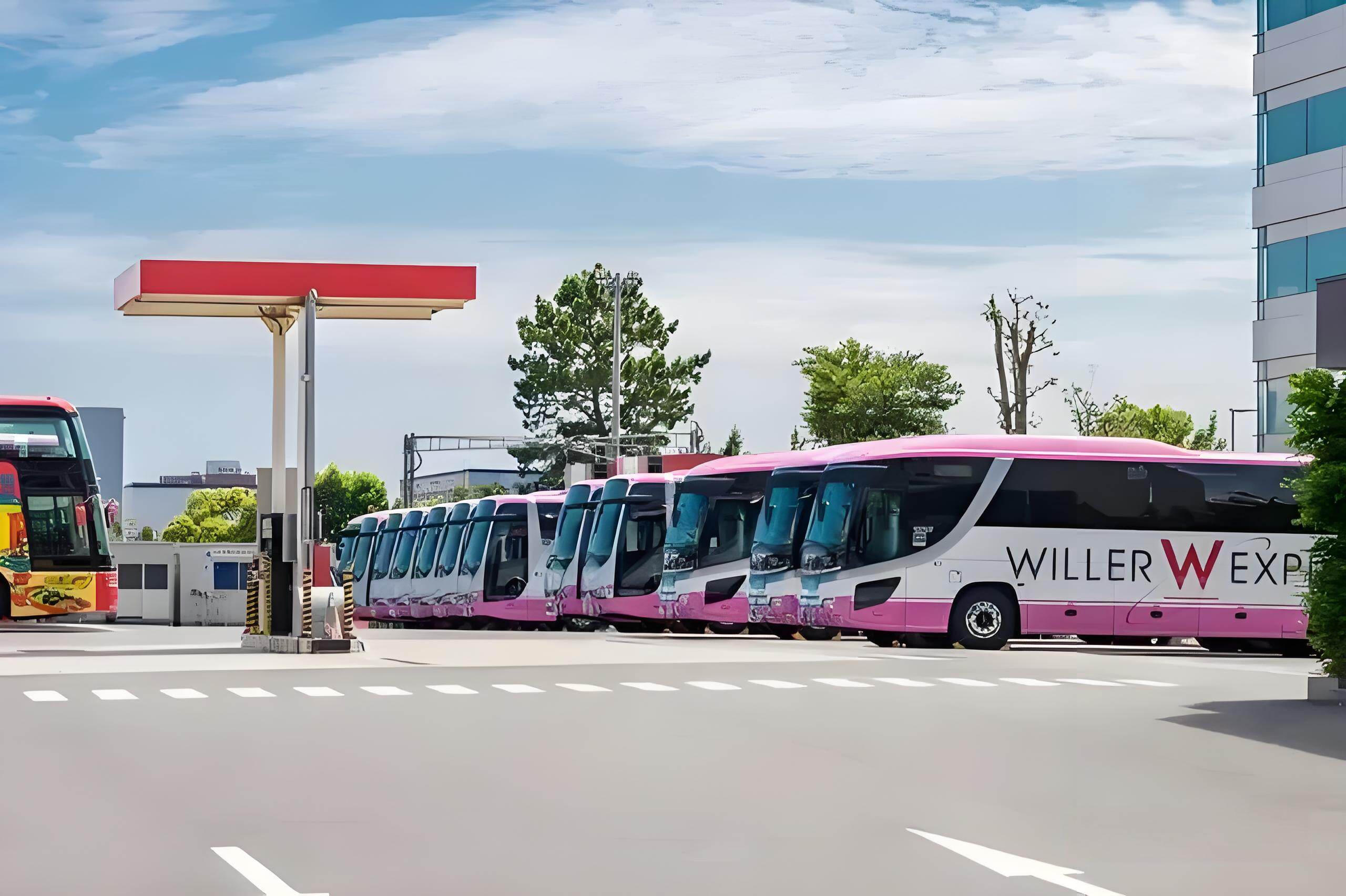
Existing fleet photo for context; it does not identify the vehicle or facilities assigned to your booking.
Bus advantages and trade-offs
Bus stops can be convenient for your accommodation, but prolonged sitting and overnight arrival may be tiring. Traffic, weather and road restrictions can change arrival time. Leave a buffer before flights or other reservations, and consider access to your hotel before check-in opens.
Bus price and journey time
Use the WILLER Tokyo–Osaka search or another operator's dated timetable to compare the departure point, scheduled duration, seat type and total price. The route search requires travel conditions; an unfiltered page does not prove a live fare or availability. Fares can differ by travel date and service, so a historic “from” price is not a budget guarantee.
Bus booking
Check the booking deadline, payment method, cancellation terms and luggage limits for the selected bus. Reservation opening dates and same-day sales differ by operator; do not assume every service opens one month ahead or permits walk-up boarding.
Finding and boarding your bus
Open the exact boarding-point map in your confirmation. A stop described as Tokyo, Shinjuku, Umeda or Namba is not necessarily inside the railway station, and different services can use different stops. Arrive by the stated check-in time, keep your booking details accessible and confirm the operator and service number before boarding.
Tokyo to Osaka by flight
Search for the actual airport pair and date: Tokyo-area airports include Haneda and Narita, while Osaka-area options include Itami and Kansai. Not every possible pairing is served on every date. For a connecting itinerary, confirm the airport, terminal, baggage handling and connection requirements with the airline.
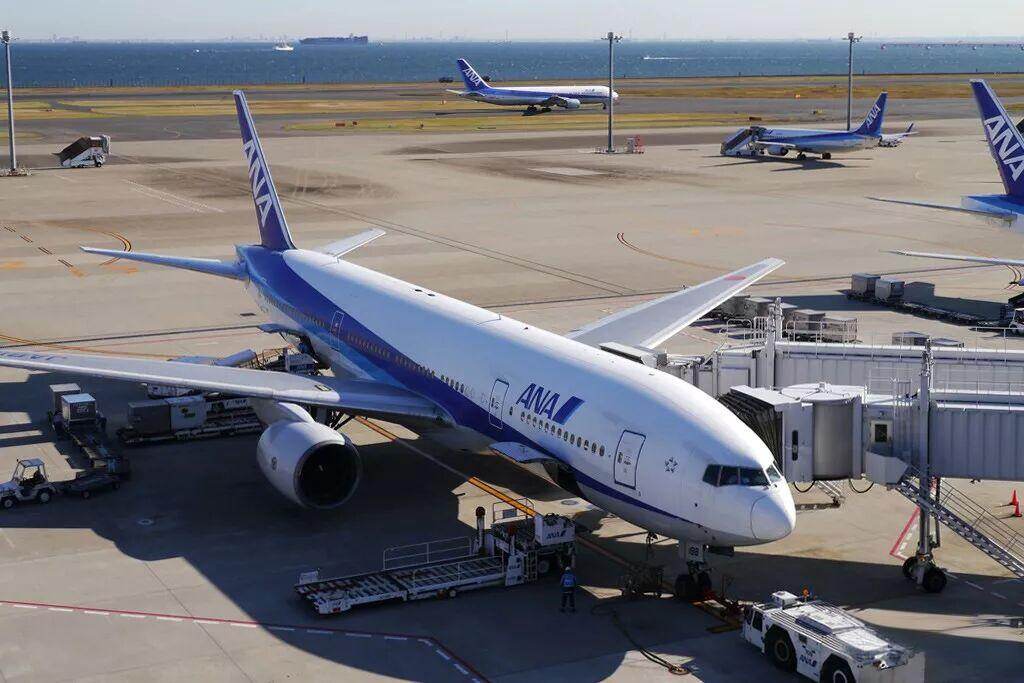
Existing airport photo for context; it does not establish a particular route, terminal or flight availability.
Flight advantages and trade-offs
A flight can fit well if you are already at an airport or continuing by air. For a city-to-city journey, compare access, airline check-in and baggage deadlines, security, the flight, baggage collection and transport to your hotel. Airlines and fare bundles have different baggage, seat-selection and change rules.
Flight cost and door-to-door time
Check the airline's scheduled duration and total quote for your selected service; do not compare flight time alone with the complete rail journey. Add baggage and other optional fees when they apply. Review the official Itami access guide and Kansai Airport bus guide for onward transport. Itami does not have a JR station inside the terminal, so do not plan an imaginary direct JR airport train.
Tokyo to Osaka by local and rapid trains
A conventional-rail itinerary is a different trip from a direct Shinkansen ride. It requires several connections along the route and a much larger share of the day. It can suit travellers who want regional stops and have time to plan each connection. Check the full dated itinerary, especially the final service of the day, rather than relying on a universal nine-hour estimate.
Local-train advantages and trade-offs
You can make regional sightseeing part of the journey, but crowded commuter services, stairs, luggage and missed connections may make it less comfortable. Ticket validity determines whether intermediate exits and stopovers are allowed; a single through ticket is not automatically an unlimited hop-on/hop-off pass.
Local-train cost and seasonal tickets
Price the complete itinerary and consult JR's current seasonal-ticket information if considering a special pass. Old Seishun 18 prices and flexible five-use descriptions should not be treated as current terms. Check the product's sales dates, validity days, eligible trains and usage rules before building your plan around it. Ordinary local-train tickets and seasonal passes do not automatically cover Shinkansen or limited-express supplements.
Tokyo to Osaka by rental car
A car is most useful when the road trip itself includes places difficult to reach by public transport. Driving between the centres of Tokyo and Osaka also means tolls, traffic, parking and a long day behind the wheel. Choose the route and rest stops before deciding that it will suit your group.
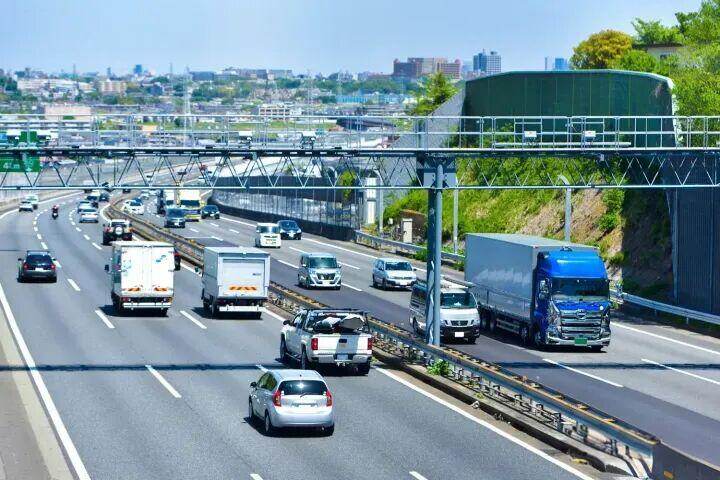
Existing expressway photo for context; journey time depends on the route and conditions on your travel date.
Driving cost and time
Calculate rental, insurance or protection options, fuel, expressway tolls, parking and any one-way drop-off fee. Use a current route estimate and add breaks; congestion or weather can extend the drive. Do not treat a fixed six-to-seven-hour estimate or combined toll-and-fuel figure as a guaranteed total.
Rental booking and driving documents
Before booking, confirm the pickup and return branches, their opening hours, the vehicle, child seats if needed, payment conditions and the one-way return policy. Check the JNTO driving-document guidance. Japan accepts specified licence arrangements: an eligible 1949 Geneva Convention International Driving Permit is one route, while licences from certain countries and regions require an authorised Japanese translation with the original licence. An arbitrary online “international licence” or digital permit is not sufficient.
Frequently Asked Questions
How long does it take to drive from Tokyo to Osaka?
Use a current estimate for your exact pickup and destination, then add rest stops and traffic allowance. Route, departure time, weather and congestion can change the total, so a fixed six-to-eight-hour figure is not a guaranteed arrival time.
Which JR Pass should I buy for Tokyo to Osaka?
Compare the complete itinerary before buying a pass. The nationwide JAPAN RAIL PASS covers eligible Hikari and Kodama travel; Nozomi requires the dedicated additional ticket with a valid pass. Do not assume a regional pass covers the Tokaido Shinkansen: the Kansai WIDE Area Pass excludes Tokyo–Shin-Osaka.
How long does the Shinkansen take from Osaka to Tokyo?
Start the search at Shin-Osaka, since Osaka Station has no Shinkansen platforms. Nozomi usually makes fewer stops than Hikari or Kodama, but the duration depends on the actual departure. Check the eastbound timetable for your date and include the journey to Shin-Osaka.
Do train, flight and bus prices change?
Yes, depending on the product. Reserved Shinkansen prices can vary by season and train type; flight and bus prices depend on the selected service and conditions. Compare dated total quotes, including baggage, connecting transport and fees, rather than old advertised prices.
Is Osaka to Tokyo different from Tokyo to Osaka?
The main transport choices work in both directions, but departure times, fares, available seats, bus stops and airport access can differ. Plan each direction separately and confirm whether your Osaka rail departure is from Shin-Osaka.
What is the easiest way from central Tokyo to Osaka?
For many central-city itineraries, the Tokaido Shinkansen from Tokyo or Shinagawa to Shin-Osaka is straightforward. Compare your hotel locations and final Osaka transfer; a flight, bus or another option can suit a different itinerary.
Can I bring luggage in a non-reserved Shinkansen car?
Ordinary luggage is allowed within JR's carry-on rules. On the Tokaido Shinkansen, baggage over 160 cm and up to 250 cm in total three-side dimensions requires the appropriate reserved seat with baggage space, so it cannot be taken to a non-reserved seat under that arrangement.
Is an overnight bus always the cheapest choice?
No. Compare the actual dated fare, access costs, luggage conditions and seat type. An overnight bus may save a hotel night, but peak-date prices and your arrival or check-in plans can change the comparison.
Does every online train booking include a QR ticket for direct entry?
No. Boarding depends on the issued product. Some bookings use a valid direct-entry QR ticket or an assigned IC card; others require collecting paper tickets. A booking reference or pickup code is not automatically a gate ticket.
Is flying always faster than the Shinkansen?
No. Compare door-to-door time, including both airport transfers, airline deadlines, security and baggage collection. A flight may fit an airport-based itinerary, while central-city travel may favour rail.